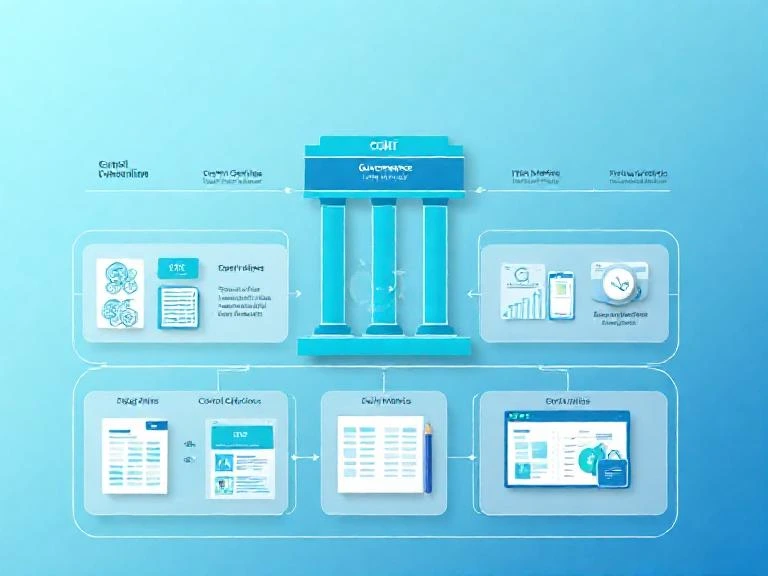
In today’s complex financial landscape, the importance of personal finance audits cannot be overstated. These audits not only help individuals assess their financial health but also empower them to make informed decisions about their financial future. As internal auditors and finance professionals, we have a unique opportunity to extend our expertise beyond organizational finances to support individuals in achieving their financial goals. This blog explores how applying the COBIT framework can enhance personal finance audits, ensuring effective governance and risk management [1].
The demand for personal finance audits is surging, driven by rising living costs, increasing debt levels, and a growing awareness of financial management’s importance. Employers are also recognizing the value of offering personal finance audits as an employee benefit, which can lead to improved job satisfaction and productivity. Conducting a personal finance audit provides individuals with a comprehensive picture of their financial situation, helping them identify areas for improvement and develop strategies for achieving stability and security.
What is COBIT?
COBIT (Control Objectives for Information and Related Technology) is a globally recognized framework designed to enhance governance and management across various domains, including personal finance. Its structured approach ensures that organizations implement effective controls and processes to manage their financial information systems [2].
Key Components of COBIT:
- Governance and Management Objectives (GMOs)
- Control Objectives
COBIT comprises two primary components:
- Governance and Management Objectives (GMOs): High-level objectives that guide organizations in governance and management, defining roles and responsibilities.
- Control Objectives: Specific control activities and processes required to achieve GMOs, including policies and procedures that ensure data integrity and compliance.
In the context of personal finance governance, COBIT emphasizes risk assessment, transparency, and accountability, making it an essential framework for organizations aiming to enhance their financial management practices.
Applying COBIT to Personal Finance Audits
Personal finance audits are crucial for ensuring effective utilization of financial resources. However, challenges often arise in assessing the completeness and accuracy of financial information. By leveraging the COBIT framework, internal auditors can enhance governance and risk management in personal finance audits [3].
COBIT’s 5 Components:
- Planning and Organization: Identify and assess risks associated with financial resources.
- Acquisition and Supply Chain Management: Evaluate the effectiveness of financial transactions and processing systems.
- Service Delivery and Support: Assess the accuracy and completeness of financial reporting.
- Infrastructure Development and Maintenance: Ensure the security and reliability of financial information systems.
- Delivery and Support: Monitor service levels and compliance with financial processes.
By applying these components, internal auditors can ensure that financial information is accurate, reliable, and secure, ultimately enhancing the effectiveness of personal finance audits.
Benefits of Using COBIT for Personal Finance Audits
Adopting COBIT for these audits offers numerous benefits, including:
- Improved Financial Transparency and Accountability: Establish clear policies and procedures for managing personal finances, ensuring compliance with regulations.
- Enhanced Risk Management: Identify potential risks and develop strategies to mitigate them, protecting against threats like identity theft.
Best Practices for Implementing COBIT in Personal Finance Audits
- Conduct a Thorough Risk Assessment: Identify risks and develop mitigation strategies.
- Develop Clear Policies and Procedures: Establish guidelines for managing personal finances.
- Implement Robust Monitoring Mechanisms: Regularly review financial data to detect potential breaches.
- Ensure Ongoing Training: Educate employees on COBIT principles and compliance importance.
Best Practices for Conducting Personal Finance Audits Using COBIT
Conducting these using COBIT’s control objectives requires a structured approach. Here are some best practices [4]:
Identifying Key Areas to Audit:
- Financial Planning and Analysis: Ensure accurate forecasting and budgeting.
- Financial Risk Management: Identify and mitigate risks.
- Account Reconciliation: Verify account balances and identify discrepancies.
- Compliance with Regulatory Requirements: Ensure adherence to relevant laws.
Actionable Tips for Conducting a Personal Finance Audit:
- Develop a comprehensive understanding of the organization’s financial processes.
- Identify key risks and develop strategies to mitigate them.
- Use COBIT’s Control Objectives as a framework for evaluating financial activities.
- Conduct regular audits to ensure ongoing compliance.
Key Takeaways
- Applying COBIT principles enhances governance and risk management in personal finance audits.
- Improved transparency and accountability lead to better financial decision-making.
- Regular audits and adherence to best practices ensure compliance and mitigate risks.
Conclusion
In conclusion, applying a globally recognized framework like COBIT to personal finance governance and risk management is essential for internal auditors and finance professionals. By adopting COBIT principles, organizations can improve their financial health, enhance transparency, and ensure compliance with regulatory requirements. The personal finance audit is not just about meeting compliance; it’s about fostering a resilient financial future for individuals and organizations alike. By leveraging COBIT, we can achieve sound, transparent, and accountable financial management.
Find out more about Shaun Stoltz https://www.shaunstoltz.com/about/
This post was written by an AI and reviewed/edited by a human.