Introduction to PMO and Maturity Models
The Project Management Office (PMO) serves as a pivotal entity that enhances the effectiveness and efficiency of project delivery within organizations. Understanding what a PMO is and how it operates is essential for PMO managers and business analysts aiming to optimize their project management practices.
Defining the PMO
A Project Management Office (PMO) is a centralized unit within an organization that standardizes project management practices and facilitates the successful execution of projects. The roles of a PMO can vary significantly depending on the organization’s needs, but they typically include:
- Governance: Establishing frameworks and guidelines to ensure projects align with organizational objectives.
- Support: Providing resources, tools, and methodologies to project teams to enhance their performance.
- Monitoring and Reporting: Tracking project progress and performance metrics to ensure accountability and transparency.
- Training and Development: Offering training programs to improve the skills and competencies of project managers and teams.
The PMO plays a crucial role in ensuring that projects are not only completed on time and within budget but also deliver value to the organization.
Importance of PMO in Organizations
The significance of a PMO cannot be overstated. It acts as a strategic partner in achieving organizational goals by:
- Enhancing Project Success Rates: By implementing standardized processes and best practices, PMOs increase the likelihood of project success.
- Improving Resource Management: PMOs help in the optimal allocation of resources across projects, reducing waste and improving efficiency.
- Facilitating Communication: They serve as a communication hub, ensuring that stakeholders are informed and engaged throughout the project lifecycle.
- Driving Strategic Alignment: PMOs ensure that projects are aligned with the broader business strategy, thereby maximizing their impact on organizational performance.
Introducing Maturity Models
Maturity models are frameworks that assess the current capabilities of an organization or a specific function, such as a PMO, against a set of criteria. These models provide a structured approach to evaluate how well a PMO is performing and identify areas for improvement.
The relevance of maturity models to PMOs lies in their ability to:
- Benchmark Performance: Organizations can compare their PMO capabilities against industry standards or best practices.
- Identify Gaps: Maturity models help in pinpointing weaknesses and areas that require development.
- Guide Improvement Initiatives: They provide a roadmap for enhancing PMO capabilities, ensuring that efforts are focused and strategic.
Overview of the PMO Maturity Model
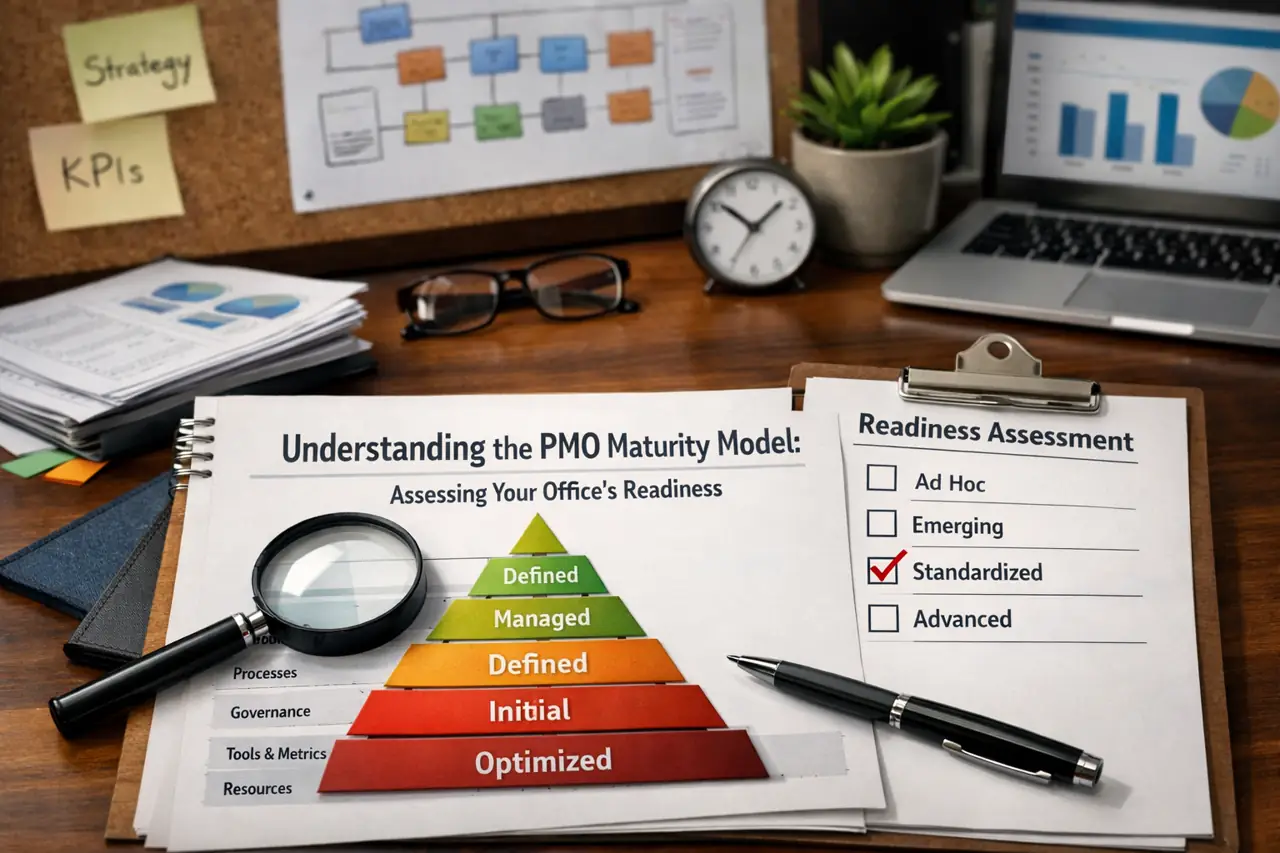
The PMO Maturity Model is a specific framework designed to assess the maturity of a PMO. It typically consists of several levels, ranging from initial or ad-hoc processes to optimized and fully integrated practices. Each level represents a stage of development, with defined characteristics and capabilities.
- Level 1: Initial – Processes are unstructured and chaotic, with little to no standardization.
- Level 2: Developing – Basic project management practices are established, but inconsistencies remain.
- Level 3: Defined – Standardized processes are in place, and the PMO begins to influence project outcomes positively.
- Level 4: Managed – The PMO actively manages and monitors project performance, with a focus on continuous improvement.
- Level 5: Optimizing – The PMO is fully integrated into the organization, driving strategic initiatives and fostering a culture of excellence in project management.
By utilizing the PMO Maturity Model, organizations can systematically evaluate their PMO’s readiness and capabilities, paving the way for targeted improvements that enhance project delivery and align with strategic objectives.
Understanding the PMO Maturity Model
The Project Management Office (PMO) maturity model is a framework that helps organizations assess and enhance their PMO capabilities. By understanding the different levels of maturity, PMO managers and business analysts can identify areas for improvement and develop strategies to advance their PMO’s effectiveness. Below, we outline the typical stages of PMO maturity, discuss the characteristics and capabilities associated with each level, and provide examples of PMOs at different maturity levels.
Typical Stages of PMO Maturity
- Initial (Ad Hoc)
- Characteristics: At this stage, the PMO is often informal and lacks standardized processes. Project management practices are inconsistent, and success is largely dependent on individual efforts rather than organizational support.
- Capabilities: Limited capability to manage projects effectively; reliance on personal experience and informal communication.
- Example: A small startup where project management is handled by team leads without formal processes or tools.
- Developing (Emerging)
- Characteristics: The PMO begins to establish basic processes and frameworks. There is a growing recognition of the need for project management, and some tools may be introduced.
- Capabilities: Improved project tracking and reporting; some level of standardization in project management practices.
- Example: A mid-sized company that has started using project management software but still lacks comprehensive training for staff.
- Defined (Established)
- Characteristics: The PMO has well-defined processes and methodologies in place. There is a clear understanding of roles and responsibilities, and project management is integrated into the organizational culture.
- Capabilities: Consistent project delivery, effective resource management, and the ability to measure project performance against established metrics.
- Example: A large organization with a dedicated PMO that follows a recognized project management methodology, such as PMBOK or PRINCE2.
- Managed (Quantitatively Managed)
- Characteristics: The PMO operates with a focus on data-driven decision-making. Performance metrics are regularly collected and analyzed to improve project outcomes.
- Capabilities: Advanced project management techniques, risk management practices, and the ability to forecast project performance based on historical data.
- Example: A multinational corporation that utilizes advanced analytics to optimize project delivery and resource allocation.
- Optimizing (Continuous Improvement)
- Characteristics: The PMO is focused on continuous improvement and innovation. There is a strong emphasis on learning from past projects and adapting processes to enhance efficiency and effectiveness.
- Capabilities: High levels of agility, the ability to implement best practices across the organization, and a culture of collaboration and knowledge sharing.
- Example: A technology firm that regularly reviews and updates its project management practices based on feedback and industry trends, fostering a culture of innovation.
Understanding the PMO maturity model is essential for PMO managers and business analysts looking to assess their office’s readiness and capabilities. By recognizing the characteristics and capabilities associated with each maturity level, organizations can develop targeted strategies to enhance their PMO’s effectiveness, ultimately leading to improved project outcomes and organizational success.
Assessing Your PMO’s Current Maturity Level
Evaluating the maturity of your Project Management Office (PMO) is crucial for understanding its current capabilities and identifying areas for improvement. The PMO maturity model provides a structured approach to assess and enhance the effectiveness of your PMO. Here’s how PMO managers can evaluate their current maturity level using assessment tools, key performance indicators (KPIs), and a self-assessment framework.
Assessment Tools and Methodologies
- PMO Maturity Models: Various maturity models exist, such as the Capability Maturity Model Integration (CMMI) and the Project Management Institute’s (PMI) PMO Maturity Model. These frameworks help organizations assess their PMO’s maturity across different dimensions, including processes, governance, and stakeholder engagement.
- Surveys and Questionnaires: Utilizing surveys can provide quantitative data on PMO performance. Tailored questionnaires can help gather insights from stakeholders about their perceptions of the PMO’s effectiveness, communication, and support.
- Benchmarking: Comparing your PMO against industry standards or similar organizations can highlight strengths and weaknesses. This can be done through industry reports or networking with other PMO leaders.
- Interviews and Focus Groups: Conducting interviews with key stakeholders and focus groups can provide qualitative insights into the PMO’s operations and areas needing improvement. This method allows for deeper discussions about challenges and successes.
Key Performance Indicators (KPIs)
When assessing your PMO’s maturity, consider the following KPIs:
- Project Success Rate: Measure the percentage of projects completed on time, within budget, and meeting quality standards. A higher success rate indicates a more mature PMO.
- Stakeholder Satisfaction: Regularly assess stakeholder satisfaction through surveys. High satisfaction levels often correlate with effective PMO practices.
- Resource Utilization: Evaluate how effectively resources are allocated and utilized across projects. Efficient resource management is a sign of a mature PMO.
- Process Compliance: Track adherence to established project management processes and methodologies. High compliance rates suggest a well-functioning PMO.
- Training and Development: Monitor the investment in training and development for project managers and team members. A mature PMO prioritizes continuous learning and skill enhancement.
Self-Assessment Checklist
To conduct a self-assessment of your PMO’s maturity, consider the following framework:
- Define Objectives: Clearly outline what you want to achieve with the assessment. Are you looking to improve processes, increase stakeholder engagement, or enhance project outcomes?
- Gather Data: Collect quantitative and qualitative data using the tools mentioned above. Ensure you involve a diverse group of stakeholders to get a comprehensive view.
- Evaluate Against Maturity Levels: Use a maturity model to evaluate your PMO’s current state. Identify which level your PMO falls into (e.g., initial, developing, established, or optimizing).
- Identify Gaps: Analyze the data to identify gaps between your current state and desired maturity level. Focus on areas that require immediate attention.
- Develop an Improvement Plan: Based on the gaps identified, create a strategic plan to enhance your PMO’s capabilities. This plan should include specific actions, timelines, and responsible parties.
- Monitor Progress: Establish a regular review process to monitor the implementation of your improvement plan and adjust as necessary.
By systematically assessing your PMO’s maturity level, you can identify strengths and weaknesses, enabling you to implement targeted improvements that enhance your PMO’s effectiveness and contribute to overall organizational success.
Identifying Gaps and Improvement Opportunities
Understanding the PMO maturity model is crucial for assessing and enhancing the capabilities of your office. This section aims to guide PMO managers and business analysts in identifying gaps in their current operations and pinpointing areas for improvement.
Analyzing Findings from the Maturity Assessment
The first step in identifying gaps is to conduct a thorough maturity assessment. This assessment evaluates the PMO’s current state against established maturity levels, typically ranging from initial (ad-hoc processes) to optimized (continuous improvement). Key findings from this assessment may include:
- Process Efficiency: Evaluate how well current processes are documented and followed. Are there inconsistencies in project execution that lead to delays or budget overruns?
- Stakeholder Engagement: Assess the level of engagement from stakeholders. Are they actively involved in project governance, or is there a disconnect that hinders project success?
- Resource Allocation: Analyze how resources are allocated across projects. Are there bottlenecks due to resource constraints, or is there a misalignment with strategic objectives?
By systematically analyzing these findings, PMO managers can gain insights into their operational strengths and weaknesses, setting the stage for targeted improvements.
Identifying Common Gaps and Challenges
PMOs often face a variety of challenges that can hinder their effectiveness, particularly at different maturity levels. Common gaps include:
- Lack of Standardization: Many PMOs struggle with inconsistent project management practices, leading to varied outcomes across projects. This is especially prevalent in organizations with a low maturity level.
- Insufficient Training and Development: A gap in skills and knowledge among team members can impede project delivery. PMOs must ensure that their staff is adequately trained in both project management methodologies and tools.
- Limited Strategic Alignment: PMOs at lower maturity levels may not align their projects with organizational goals, resulting in initiatives that do not contribute to the overall business strategy.
Recognizing these common gaps allows PMO managers to address specific issues that may be holding back their office’s performance.
Prioritizing Improvement Opportunities
Once gaps have been identified, the next step is to prioritize improvement opportunities based on organizational goals. This involves:
- Aligning with Business Objectives: Improvement initiatives should directly support the strategic goals of the organization. For instance, if the organization aims to enhance customer satisfaction, PMOs should prioritize projects that focus on customer-facing improvements.
- Assessing Impact vs. Effort: Use a matrix to evaluate potential improvements based on their expected impact and the effort required for implementation. This helps in identifying “quick wins” that can deliver immediate benefits with minimal resources.
- Engaging Stakeholders: Involve key stakeholders in the prioritization process to ensure that the selected improvements have buy-in and support from those who will be affected by the changes.
By following these steps, PMO managers can effectively identify and prioritize improvement opportunities, ultimately enhancing their office’s capabilities and contributing to the success of their organization.
Strategies for Advancing PMO Maturity
Advancing the maturity of a Project Management Office (PMO) is crucial for enhancing its capabilities and ensuring that it effectively supports organizational goals. Here are some actionable strategies and best practices that PMO Managers and Business Analysts can implement to elevate their PMO’s maturity level:
1. Training and Development Programs for PMO Staff
Investing in the continuous education and professional development of PMO staff is essential. Consider the following approaches:
– Certification Programs: Encourage team members to pursue relevant certifications such as Project Management Professional (PMP), Agile Certified Practitioner (PMI-ACP), or certifications specific to PMO management.
– Workshops and Seminars: Organize regular workshops that focus on emerging trends in project management, tools, and methodologies. This can help staff stay updated and improve their skill sets.
– Mentorship Programs: Establish mentorship opportunities where experienced PMO professionals can guide newer team members, fostering knowledge transfer and professional growth.
2. Importance of Stakeholder Engagement and Communication
Effective stakeholder engagement is vital for the success of a PMO. Strategies to enhance this include:
– Regular Communication: Implement structured communication plans that outline how and when stakeholders will be updated on project progress, challenges, and successes.
– Stakeholder Analysis: Conduct thorough stakeholder analysis to understand their needs, expectations, and influence on projects. This can help tailor communication strategies effectively.
– Feedback Mechanisms: Create channels for stakeholders to provide feedback on PMO processes and performance, ensuring their voices are heard and considered in decision-making.
3. Tools and Technologies to Enhance PMO Capabilities
Leveraging the right tools and technologies can significantly improve PMO efficiency and effectiveness. Consider the following:
– Project Management Software: Utilize comprehensive project management tools like Microsoft Project, Asana, or Trello to streamline project planning, execution, and monitoring.
– Collaboration Platforms: Implement collaboration tools such as Slack or Microsoft Teams to facilitate communication and collaboration among team members and stakeholders.
– Data Analytics Tools: Use data analytics platforms to track project performance metrics, enabling data-driven decision-making and identifying areas for improvement.
4. Role of Continuous Improvement and Feedback Loops
Establishing a culture of continuous improvement is essential for advancing PMO maturity. Key practices include:
– Regular Assessments: Conduct periodic assessments of PMO processes and performance against established maturity models to identify strengths and weaknesses.
– Feedback Loops: Create structured feedback loops where team members and stakeholders can share insights on PMO operations, leading to iterative improvements.
– Best Practices Sharing: Encourage the sharing of best practices within the PMO and across the organization to foster a learning environment and drive innovation.
By implementing these strategies, PMO Managers and Business Analysts can effectively assess and enhance their PMO’s maturity, ultimately leading to improved project outcomes and organizational success.
Measuring Success and Continuous Improvement
The Project Management Office (PMO) plays a crucial role in ensuring that projects align with organizational goals and deliver value. Understanding the PMO maturity model is essential for PMO managers and business analysts who aim to evaluate and enhance their office’s capabilities. This section focuses on measuring the success of PMO initiatives and fostering a culture of continuous improvement.
Methods for Measuring the Success of PMO Initiatives
- Key Performance Indicators (KPIs):
- Establishing KPIs is vital for quantifying the effectiveness of PMO initiatives. Common KPIs include project delivery timelines, budget adherence, stakeholder satisfaction, and resource utilization. By tracking these metrics, PMOs can assess their performance and identify areas for improvement.
- Stakeholder Feedback:
- Regularly soliciting feedback from stakeholders, including project managers and team members, provides valuable insights into the PMO’s effectiveness. Surveys and interviews can help gauge satisfaction levels and uncover potential issues that need addressing.
- Project Success Rates:
- Analyzing the success rates of projects managed by the PMO can serve as a direct measure of its impact. This includes evaluating whether projects meet their objectives, stay within budget, and are completed on time.
- Benchmarking:
- Comparing the PMO’s performance against industry standards or similar organizations can highlight strengths and weaknesses. Benchmarking helps identify best practices and areas where the PMO can improve its processes.
Establishing KPIs is vital for quantifying the effectiveness of PMO initiatives. Common KPIs
Importance of Regular Reviews and Updates to the Maturity Assessment
Conducting regular reviews of the PMO’s maturity assessment is crucial for several reasons:
- Adaptation to Change: Project management is constantly evolving, with new methodologies and technologies emerging. Regular assessments ensure that the PMO remains relevant and can adapt to these changes effectively.
- Continuous Learning: By revisiting the maturity model, PMOs can identify lessons learned from past projects and initiatives. This reflection fosters a culture of continuous learning and improvement, enabling the PMO to refine its processes and practices.
- Alignment with Organizational Goals: As organizational strategies shift, the PMO must ensure that its objectives align with these changes. Regular maturity assessments help maintain this alignment, ensuring that the PMO continues to deliver value to the organization.
Encouraging a Mindset of Agility and Adaptability in PMO Practices
In today’s fast-paced business environment, fostering a mindset of agility and adaptability within the PMO is essential. Here are some strategies to encourage this mindset:
- Embrace Change: PMOs should promote a culture that welcomes change rather than resists it. This can be achieved by encouraging team members to share innovative ideas and experiment with new approaches to project management.
- Flexible Processes: Implementing flexible processes that can be adjusted based on project needs allows the PMO to respond quickly to changing circumstances. This adaptability can lead to more effective project outcomes.
- Training and Development: Investing in ongoing training and development for PMO staff ensures that they are equipped with the latest skills and knowledge. This not only enhances individual capabilities but also strengthens the overall effectiveness of the PMO.
By measuring success through established methods, regularly reviewing maturity assessments, and fostering an agile mindset, PMOs can significantly enhance their capabilities and contribute to the overall success of their organizations. Emphasizing continuous improvement will not only lead to better project outcomes but also instill a culture of excellence within the PMO.
Conclusion
Understanding the PMO (Project Management Office) maturity model is crucial for enhancing the effectiveness and efficiency of your PMO. This model serves as a framework that allows PMO managers to assess their current capabilities, identify areas for improvement, and strategically plan for future growth. By recognizing where your PMO stands within the maturity model, you can make informed decisions that align with organizational goals and project success.
Key points to consider include:
- Importance of the PMO Maturity Model: The maturity model provides a structured approach to evaluate the PMO’s processes, practices, and performance. It helps in identifying strengths and weaknesses, enabling PMO managers to prioritize initiatives that will yield the most significant impact on project outcomes. Understanding this model is not just beneficial; it is essential for driving continuous improvement and ensuring that the PMO remains relevant in a rapidly changing business environment.
- Self-Assessment: PMO managers are urged to conduct regular assessments of their PMO’s maturity. This self-evaluation should be comprehensive, involving feedback from stakeholders and team members. By developing improvement plans based on these assessments, PMOs can implement targeted strategies that enhance their capabilities, ultimately leading to better project delivery and stakeholder satisfaction.
- Ongoing Development and Proactivity: The journey of PMO development is continuous. It is vital for PMO managers to adopt a proactive mindset, regularly revisiting the maturity model to ensure that their PMO evolves alongside organizational needs and industry trends. This ongoing commitment to improvement not only strengthens the PMO but also fosters a culture of excellence within the organization.
Leveraging the PMO maturity model is a powerful way for PMO managers to assess their office’s readiness and capabilities. By taking action based on the insights gained from this model, PMOs can enhance their effectiveness, drive project success, and contribute significantly to their organizations’ strategic objectives. Embrace the journey of maturity and make proactive improvements that will position your PMO for long-term success.
Find out more about Shaun Stoltz https://www.shaunstoltz.com/about/.
This post was written by an AI and reviewed/edited by a human.