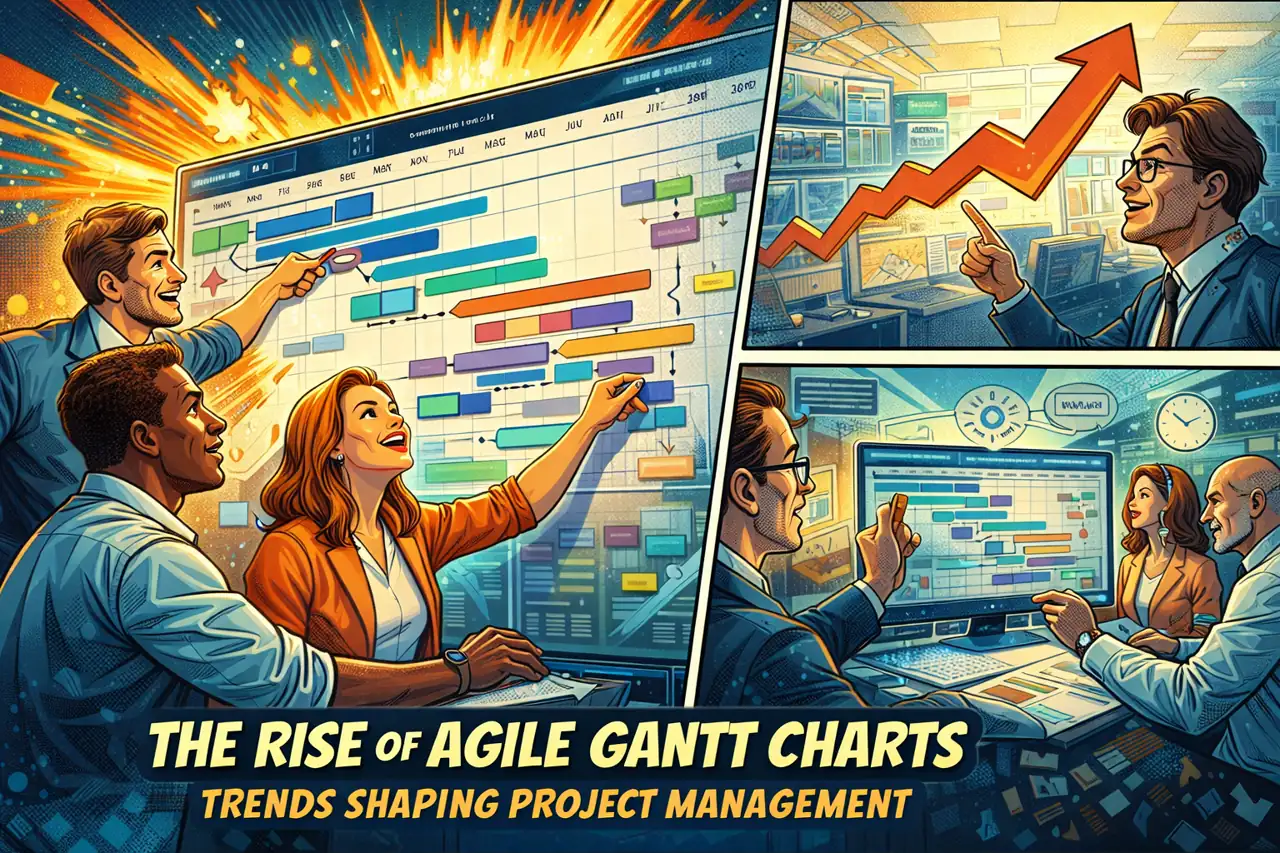
Introduction to Agile Gantt Charts
Agile Gantt Charts have emerged as a significant tool that bridges the gap between traditional project management techniques and modern agile methodologies. As organizations increasingly adopt agile practices to enhance flexibility and responsiveness, the integration of Gantt charts into this framework has become a noteworthy trend.
Definition of Agile Gantt Charts
Agile Gantt Charts are a hybrid project management tool that combines the visual timeline features of traditional Gantt charts with the iterative and flexible nature of agile methodologies. Unlike standard Gantt charts, which typically represent a linear progression of tasks and timelines, Agile Gantt Charts allow for dynamic updates and adjustments based on ongoing project developments. This adaptability is crucial in agile environments, where project requirements can change rapidly, and teams need to respond effectively.
Overview of Traditional Gantt Charts and Their Limitations in Agile Environments
Traditional Gantt charts have long been a staple in project management, providing a clear visual representation of project timelines, task dependencies, and milestones. However, they come with several limitations, particularly in agile settings:
- Rigidity: Traditional Gantt charts often assume a fixed project scope and timeline, which can be counterproductive in agile projects where requirements evolve.
- Lack of Collaboration: These charts typically focus on individual tasks and timelines, which can hinder team collaboration and communication.
- Difficulty in Tracking Progress: In agile projects, progress is often measured in iterations or sprints, making it challenging to represent this dynamic progress accurately on a static Gantt chart.
These limitations have prompted project managers to seek more flexible solutions that align with agile principles, leading to the development of Agile Gantt Charts.
Evolution of Project Management Methodologies Leading to the Adoption of Agile Gantt Charts
The shift towards Agile Gantt Charts is a reflection of broader trends in project management methodologies. Over the past few years, there has been a significant movement towards agile practices, driven by the need for faster delivery, improved customer satisfaction, and enhanced adaptability. Key factors contributing to this evolution include:
- Increased Demand for Flexibility: As businesses face rapidly changing market conditions, the ability to pivot and adapt project plans is more critical than ever.
- Emphasis on Collaboration: Modern project management emphasizes teamwork and collaboration, necessitating tools that facilitate communication and collective progress tracking.
- Integration of Technology: The rise of project management software that supports agile methodologies has made it easier to implement Agile Gantt Charts, allowing teams to visualize their work while remaining adaptable.
Agile Gantt Charts represent a significant advancement in project management tools, merging the structured approach of traditional Gantt charts with the flexibility required in agile environments. As project managers and business analysts continue to navigate the complexities of modern projects, understanding and utilizing Agile Gantt Charts will be essential for successful project delivery.
The Importance of Agile Methodologies in Project Management
In project management, agile methodologies have emerged as a cornerstone for teams seeking flexibility and responsiveness. Understanding the significance of these methodologies is crucial for project managers and business analysts alike. Here’s a closer look at the key aspects of agile principles and frameworks, their benefits, and their adaptability to changing project requirements.
Overview of Agile Principles and Frameworks
Agile methodologies are grounded in a set of principles that prioritize collaboration, customer feedback, and iterative progress. The Agile Manifesto emphasizes four core values:
- Individuals and Interactions Over Processes and Tools: This principle highlights the importance of team collaboration and communication.
- Working Software Over Comprehensive Documentation: Agile focuses on delivering functional products rather than getting bogged down by extensive documentation.
- Customer Collaboration Over Contract Negotiation: Engaging with customers throughout the project ensures that the final product meets their needs.
- Responding to Change Over Following a Plan: Agile methodologies embrace change, allowing teams to adapt to new information and shifting requirements.
Among the various frameworks that embody these principles, Scrum and Kanban are particularly noteworthy:
- Scrum: This framework divides projects into time-boxed iterations called sprints, typically lasting two to four weeks. Scrum emphasizes roles such as the Scrum Master and Product Owner, facilitating structured meetings like daily stand-ups and sprint reviews.
- Kanban: This visual management tool focuses on continuous delivery and workflow optimization. By using a Kanban board, teams can visualize tasks, limit work in progress, and enhance efficiency.
Benefits of Adopting Agile Methodologies for Project Success
The adoption of agile methodologies offers numerous advantages that contribute to project success:
- Increased Flexibility: Agile allows teams to pivot quickly in response to changing project requirements or market conditions. This adaptability is essential in today’s fast-paced business environment.
- Enhanced Collaboration: Agile fosters a culture of teamwork and open communication, leading to better alignment among team members and stakeholders. Regular feedback loops ensure that everyone is on the same page.
- Higher Customer Satisfaction: By involving customers throughout the development process, agile methodologies ensure that the final product aligns closely with their expectations, resulting in higher satisfaction rates.
- Improved Risk Management: Agile’s iterative approach allows for early detection of issues, enabling teams to address potential risks before they escalate into significant problems.
Responding to Changing Project Requirements
One of the most significant advantages of agile methodologies is their inherent ability to respond to changing project requirements. Traditional project management often relies on rigid planning and forecasting, which can lead to challenges when unexpected changes arise. In contrast, agile methodologies embrace change as a natural part of the project lifecycle.
- Iterative Development: Agile promotes short development cycles, allowing teams to release incremental updates. This means that feedback can be incorporated quickly, and adjustments can be made based on real-time insights.
- Prioritization of Features: Agile frameworks often utilize techniques like the MoSCoW method (Must have, Should have, Could have, Won’t have) to prioritize features based on customer needs and project goals. This ensures that the most critical elements are addressed first, even if requirements shift.
- Continuous Improvement: Agile encourages teams to reflect on their processes regularly through retrospectives. This practice not only helps identify areas for improvement but also fosters a culture of learning and adaptation.
The rise of agile methodologies in project management is reshaping how teams approach their work. By embracing flexibility, enhancing collaboration, and prioritizing customer satisfaction, agile practices are proving to be indispensable in navigating the complexities of modern projects. Understanding and implementing these methodologies will be crucial for project managers and business analysts aiming for success in their endeavors.
Emerging Trends in Project Management Tools
As project management continues to evolve, the integration of Agile principles into traditional methodologies is becoming increasingly prominent. One of the most notable developments in this space is the emergence of Agile Gantt charts, which blend the structured timeline of Gantt charts with the flexibility of Agile methodologies. Here are some key trends shaping project management tools:
- Increased Integration of AI and Machine Learning:
- Project management tools are increasingly leveraging artificial intelligence (AI) and machine learning to enhance decision-making processes. These technologies can analyze historical project data to predict potential risks, optimize resource allocation, and automate routine tasks. This allows project managers to focus on strategic planning and team collaboration rather than getting bogged down in administrative details. AI-driven insights can also help teams adapt their Agile practices more effectively, ensuring that projects remain on track and aligned with business goals.
- The Rise of Collaborative Platforms for Remote Teams:
- With the shift towards remote work, collaborative platforms are becoming essential for project management. Tools that facilitate real-time communication and collaboration among team members, regardless of their location, are gaining traction. Agile Gantt charts are particularly beneficial in this context, as they provide a visual representation of project timelines while allowing teams to adjust tasks dynamically. This flexibility is crucial for remote teams that need to respond quickly to changes and maintain alignment on project objectives.
- Focus on Data Visualization and Real-Time Reporting Features:
- As project complexity increases, the need for effective data visualization becomes paramount. Modern project management tools are incorporating advanced data visualization techniques to present project progress, resource utilization, and performance metrics in an easily digestible format. Real-time reporting features enable project managers to track progress and make informed decisions on the fly. Agile Gantt charts, with their ability to display both timelines and task dependencies, are particularly effective in providing a clear overview of project status, helping teams to identify bottlenecks and adjust priorities swiftly.
The rise of Agile Gantt charts reflects a broader trend towards integrating Agile principles with traditional project management tools. As AI, collaborative platforms, and advanced data visualization techniques continue to shape the subject matter, project managers and business analysts must stay informed about these developments to leverage the full potential of their project management strategies.
How Agile Gantt Charts Enhance Project Visibility and Flexibility
Agile Gantt Charts are emerging as a powerful tool that combines the structured planning of traditional Gantt charts with the flexibility and adaptability of Agile methodologies. This section explores how Agile Gantt Charts enhance project visibility and flexibility, making them an essential asset for project managers and business analysts.
Comparison of Agile Gantt Charts with Traditional Gantt Charts
- Flexibility: Traditional Gantt charts are often rigid, designed for linear project timelines and fixed schedules. In contrast, Agile Gantt Charts allow for dynamic adjustments, accommodating changes in project scope and priorities. This flexibility is crucial in Agile environments where requirements can evolve rapidly, enabling teams to pivot without losing sight of overall project goals.
- Iterative Planning: Agile Gantt Charts support iterative planning, allowing project teams to break down tasks into smaller, manageable increments. This contrasts with traditional Gantt charts, which typically outline a complete project timeline upfront. Agile Gantt Charts facilitate ongoing reassessment and reallocation of resources based on real-time feedback and project developments.
Real-time Tracking and Updates for Project Timelines and Milestones
- Instant Updates: One of the standout features of Agile Gantt Charts is their ability to provide real-time tracking of project timelines and milestones. As tasks progress, updates can be made instantly, ensuring that all team members and stakeholders have access to the most current information. This immediacy helps in identifying potential bottlenecks early and allows for timely interventions.
- Enhanced Visibility: With real-time updates, Agile Gantt Charts enhance visibility across the project. Stakeholders can easily see the status of various tasks, understand dependencies, and gauge overall project health. This transparency fosters trust and accountability among team members and stakeholders, as everyone is aligned on project progress.
Utilizing Agile Gantt Charts for Effective Communication Among Stakeholders
- Centralized Information Hub: Agile Gantt Charts serve as a centralized hub for project information, making it easier for project managers to communicate with stakeholders. By visualizing timelines, task assignments, and progress, these charts facilitate discussions and decision-making processes, ensuring that everyone is on the same page.
- Stakeholder Engagement: The visual nature of Agile Gantt Charts makes them an effective tool for engaging stakeholders. They can quickly grasp complex project details without needing to delve into extensive documentation. This engagement is vital for maintaining stakeholder interest and support throughout the project lifecycle.
- Feedback Loops: Agile methodologies emphasize collaboration and feedback. Agile Gantt Charts support this by allowing stakeholders to provide input on timelines and task priorities. This collaborative approach not only enhances project outcomes but also strengthens relationships among team members and stakeholders.
Agile Gantt Charts represent a significant advancement in project management tools, offering enhanced visibility and flexibility that traditional Gantt charts cannot match. By embracing these charts, project managers and business analysts can navigate the complexities of modern projects more effectively, ensuring successful outcomes in an ever-changing environment. As we move further, the integration of Agile Gantt Charts into project management practices will likely continue to grow, reflecting the ongoing shift towards more adaptive and responsive project methodologies.
Best Practices for Implementing Agile Gantt Charts
As project management continues to evolve, Agile Gantt Charts have emerged as a powerful tool that combines the structured timeline of traditional Gantt charts with the flexibility of Agile methodologies. Here are some best practices for successfully integrating Agile Gantt Charts into your project management workflows:
Steps to Transition from Traditional Gantt Charts to Agile Gantt Charts
- Assess Current Processes: Begin by evaluating your existing project management practices. Identify the limitations of traditional Gantt charts in your context, such as rigidity and lack of adaptability to change.
- Define Agile Principles: Familiarize your team with Agile principles, emphasizing collaboration, flexibility, and iterative progress. This foundational understanding is crucial for a smooth transition.
- Select the Right Tools: Choose project management software that supports Agile Gantt Charts. Look for features that allow for real-time updates, task dependencies, and team collaboration.
- Create a Hybrid Model: Start by integrating Agile elements into your existing Gantt charts. For instance, break down projects into smaller, manageable sprints while maintaining a visual timeline to track progress.
- Iterate and Improve: Use feedback from team members to refine the Agile Gantt Chart process. Regularly review and adjust the chart based on project needs and team input.
Training and Resources Needed for Teams
- Workshops and Training Sessions: Organize training sessions focused on Agile methodologies and the specific use of Agile Gantt Charts. This will help team members understand the new approach and its benefits.
- Access to Online Resources: Provide access to online courses, webinars, and articles that cover Agile project management and Gantt chart best practices. This will enhance team knowledge and skills.
- Mentorship and Support: Pair less experienced team members with Agile coaches or mentors who can guide them through the transition and provide ongoing support.
Importance of Continuous Feedback and Adaptation in the Implementation Process
- Regular Check-Ins: Schedule frequent meetings to discuss progress, challenges, and feedback regarding the Agile Gantt Chart implementation. This fosters a culture of open communication and continuous improvement.
- Adapt to Change: Encourage teams to be flexible and willing to adapt the Agile Gantt Chart as project requirements evolve. This adaptability is key to maintaining project momentum and meeting stakeholder expectations.
- Celebrate Successes: Acknowledge and celebrate milestones achieved using Agile Gantt Charts. Recognizing team efforts boosts morale and reinforces the value of the new approach.
By following these best practices, project managers and business analysts can effectively implement Agile Gantt Charts, enhancing their project management workflows and driving successful project outcomes.
Looking Ahead: The Future of Agile Gantt Charts in Project Management
Project management continues to evolve, driven by technological advancements and changing business needs. Agile Gantt charts, which blend traditional Gantt chart features with Agile methodologies, are becoming increasingly relevant. Here are some key trends and predictions regarding the future of Agile Gantt charts in project management:
Predictions for Advancements in Technology and Methodologies
- Integration with AI and Machine Learning: The future of Agile Gantt charts will likely see deeper integration with artificial intelligence (AI) and machine learning technologies. These tools can analyze project data in real-time, providing insights that help project managers make informed decisions quickly. Predictive analytics could enhance the ability to foresee potential project delays or resource shortages, allowing for proactive adjustments.
- Enhanced Collaboration Tools: As remote work becomes more prevalent, Agile Gantt charts will evolve to include more robust collaboration features. This may involve real-time updates, shared dashboards, and integrated communication tools that allow team members to interact seamlessly, regardless of their location. The focus will be on creating a more interactive and engaging user experience.
- Customization and Flexibility: Future Agile Gantt charts will likely offer greater customization options to cater to diverse project needs. This could include adjustable timelines, customizable task dependencies, and the ability to incorporate various Agile frameworks (like Scrum or Kanban) into the Gantt chart format. This flexibility will help teams adapt their project management approach to fit specific project requirements.
Potential Impact on Project Management Roles and Responsibilities
- Shift in Skill Requirements: As Agile Gantt charts become more sophisticated, project managers will need to develop new skills to leverage these tools effectively. This includes a deeper understanding of data analytics, Agile methodologies, and technology integration. Project managers may also need to adopt a more facilitative role, focusing on enabling team collaboration and communication rather than merely tracking progress.
- Increased Focus on Agile Practices: The rise of Agile Gantt charts signifies a broader shift towards Agile practices in project management. This trend will likely lead to a redefinition of project management roles, with an emphasis on adaptability, iterative planning, and stakeholder engagement. Project managers will need to embrace Agile principles, fostering a culture of continuous improvement and responsiveness to change.
The Ongoing Evolution of Project Management Practices
- Response to Global Business Needs: The global business environment is constantly changing, and project management practices must evolve accordingly. Agile Gantt charts will play a crucial role in helping organizations respond to market demands, customer feedback, and technological advancements. By providing a visual representation of project timelines and progress, these tools will enable teams to pivot quickly and align their efforts with strategic business goals.
- Emphasis on Transparency and Accountability: As organizations strive for greater transparency and accountability, Agile Gantt charts will facilitate clearer communication of project status to stakeholders. This transparency will help build trust and ensure that all team members are aligned with project objectives, ultimately leading to more successful project outcomes.
The future of Agile Gantt charts in project management is poised for significant transformation. By embracing technological advancements, redefining roles, and adapting to global business needs, project managers can leverage these tools to enhance collaboration, improve efficiency, and drive project success in an increasingly complex environment. As we look ahead, the integration of Agile Gantt charts into project management practices will undoubtedly shape the way teams work together and achieve their goals.
Embracing the Agile Gantt Chart Revolution
The integration of Agile methodologies with traditional Gantt charts is becoming increasingly prominent. This hybrid approach offers a range of benefits that can significantly enhance project planning and execution. Here are the key takeaways from our exploration of Agile Gantt charts:
- Enhanced Flexibility: Agile Gantt charts allow project managers to adapt to changes swiftly, accommodating shifting priorities and evolving project requirements. This flexibility is crucial in today’s fast-paced business environment, where responsiveness can determine project success.
- Improved Collaboration: By incorporating Agile principles, these charts foster better communication and collaboration among team members. They provide a visual representation of project timelines while allowing for real-time updates, ensuring that everyone is aligned and informed.
- Increased Transparency: Agile Gantt charts promote transparency in project progress, making it easier for stakeholders to track milestones and deliverables. This visibility helps in managing expectations and enhances accountability within the team.
- Data-Driven Decision Making: The integration of Agile practices with Gantt charts enables project managers to leverage data analytics for informed decision-making. By analyzing progress and performance metrics, teams can identify bottlenecks and optimize workflows effectively.
As project managers and business analysts, it is essential to consider the adoption of Agile Gantt charts in your workflows. These tools not only streamline project management processes but also empower teams to work more efficiently and collaboratively.
Find out more about Shaun Stoltz https://www.shaunstoltz.com/about/.
This post was written by an AI and reviewed/edited by a human.