Introduction to Task Charts in Non-Profit Project Management
Task charts serve as essential tools that help teams visualize, organize, and track the progress of various activities within a project. These charts provide a structured approach to managing tasks, ensuring that all team members are aligned and aware of their responsibilities. For non-profit organizations, where resources are often limited and the stakes are high, the effective use of task charts can significantly enhance project outcomes.
Definition of Task Charts and Their Role in Project Management
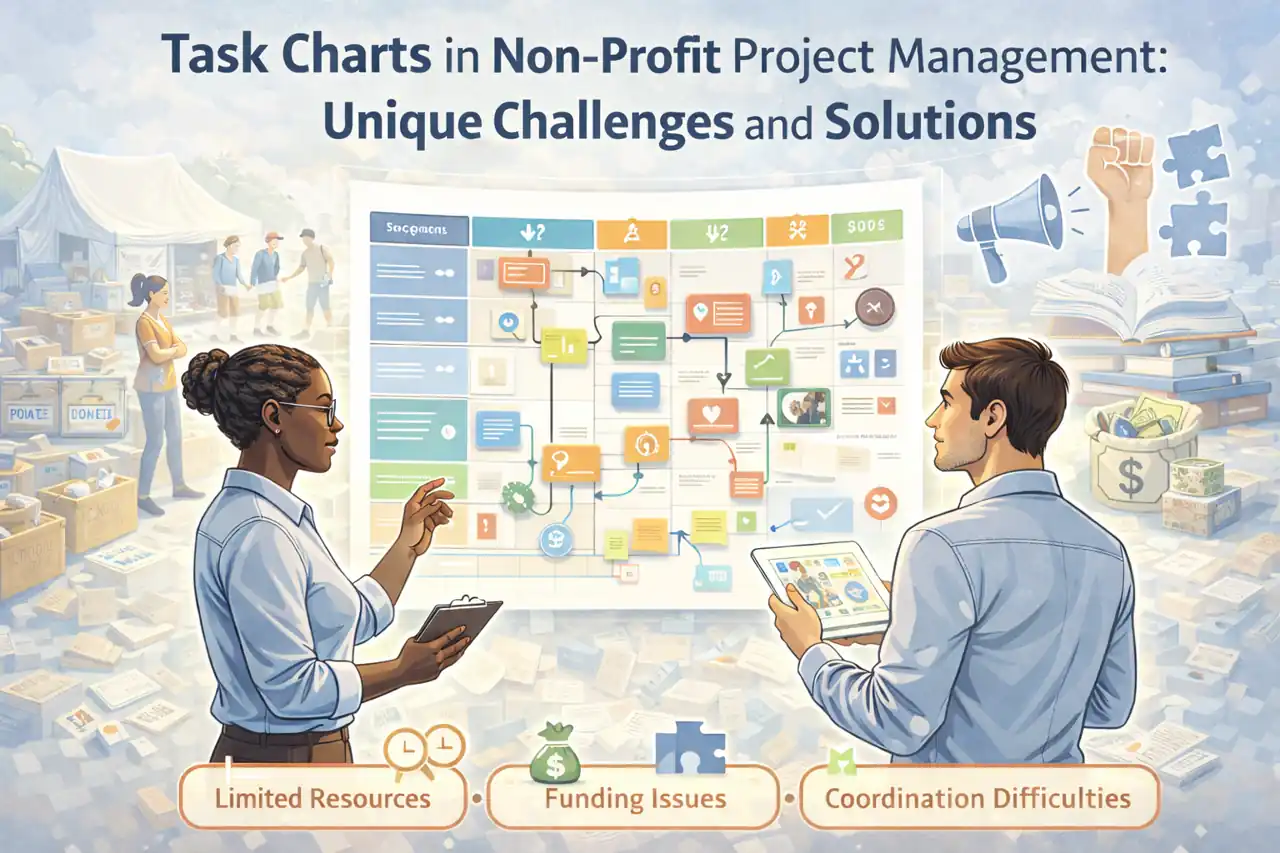
Task charts, often referred to as task lists or Gantt charts, are visual representations that outline the tasks required to complete a project, along with their timelines and dependencies. They play a crucial role in project management by:
- Clarifying Responsibilities: Task charts delineate who is responsible for each task, reducing ambiguity and ensuring accountability among team members.
- Tracking Progress: By visually displaying the status of tasks, these charts allow project managers to monitor progress and identify any delays or bottlenecks in real-time.
- Facilitating Communication: Task charts serve as a common reference point for all stakeholders, fostering better communication and collaboration within the team.
Importance of Task Charts in Organizing Non-Profit Projects
In non-profit project management, the importance of task charts cannot be overstated. They provide a framework that helps organizations navigate the complexities of their projects, which often involve multiple stakeholders, limited budgets, and tight deadlines. Key benefits include:
- Enhanced Organization: Task charts help non-profits break down large projects into manageable tasks, making it easier to allocate resources and prioritize activities.
- Improved Time Management: By establishing clear timelines for each task, non-profits can better manage their time and ensure that projects are completed on schedule.
- Resource Optimization: With a clear overview of tasks and their requirements, non-profits can allocate their limited resources more effectively, ensuring that every effort contributes to the project’s success.
Overview of Unique Challenges Faced by Non-Profits
Non-profit organizations often encounter unique challenges that can complicate project management. These include:
- Limited Resources: Non-profits frequently operate with constrained budgets and volunteer staff, making it essential to maximize the efficiency of every task.
- Diverse Stakeholder Needs: Non-profits must cater to a variety of stakeholders, including donors, beneficiaries, and volunteers, each with their own expectations and requirements.
- Dynamic Environments: The nature of non-profit work often involves responding to changing community needs and external factors, which can impact project timelines and objectives.
By understanding these challenges, non-profit project managers can adapt task charts to better meet their specific needs, ensuring that their projects are not only well-organized but also responsive to the dynamic environment in which they operate.
Unique Challenges of Non-Profit Project Management
Non-profit project management presents a distinct set of challenges that can complicate the effective use of task charts. Understanding these challenges is crucial for project managers and volunteers who aim to adapt task charts to better meet the needs of their organizations. Here are some of the key challenges faced in this sector:
- Limited Resources: Non-profits often operate with constrained budgets, limited time, and insufficient manpower. This scarcity can hinder the ability to allocate adequate resources to tasks, making it essential for project managers to prioritize effectively and utilize task charts to maximize efficiency. Task charts must be designed to reflect these limitations, ensuring that critical tasks are highlighted and that resource allocation is transparent and manageable.
- High Volunteer Turnover and Varying Levels of Commitment: Non-profits frequently rely on volunteers, who may have fluctuating availability and varying levels of commitment. This inconsistency can disrupt project timelines and task completion. Task charts need to be flexible and adaptable, allowing for quick adjustments when volunteer participation changes. Incorporating features that track volunteer engagement and availability can help project managers anticipate and mitigate disruptions.
- Need for Collaboration Among Diverse Stakeholder Groups: Non-profit projects often involve collaboration among various stakeholders, including community members, donors, and partner organizations. Each group may have different priorities and expectations, complicating task management. Task charts should facilitate communication and collaboration by clearly outlining roles, responsibilities, and timelines, ensuring that all stakeholders are aligned and informed throughout the project lifecycle.
- Challenges in Measuring Impact and Success: Non-profits must demonstrate their impact to secure funding and support, yet measuring success can be complex. Task charts can be adapted to include metrics for tracking progress and outcomes, helping project managers visualize the relationship between tasks and overall project goals. By integrating evaluation criteria into task charts, non-profits can better assess their effectiveness and make data-driven decisions for future projects.
Adapting task charts to address these unique challenges can significantly enhance the effectiveness of non-profit project management. By recognizing the limitations and complexities inherent in this sector, project managers can create more effective task management strategies that align with their organizational goals and the needs of their stakeholders.
Adapting Task Charts for Non-Profit Projects
Task charts serve as essential tools for organizing and tracking project activities. However, the unique nature of non-profit work—often characterized by limited resources, fluctuating timelines, and a diverse volunteer base—requires a tailored approach to effectively utilize these charts. Here are some strategies for adapting task charts to meet the specific needs of non-profit projects:
- Customizing Task Charts for Flexible Timelines: Non-profit projects frequently face unpredictable changes due to funding cycles, community needs, or volunteer availability. To accommodate these fluctuations, task charts should be designed with flexibility in mind. This can include using color-coded timelines that allow for easy adjustments or incorporating milestones that can be shifted as needed. By creating a dynamic task chart, project managers can ensure that all team members remain aligned with the project’s evolving schedule.
- Incorporating Volunteer Availability and Skills: Volunteers are often the backbone of non-profit organizations, bringing diverse skills and varying levels of availability. Task charts should reflect this by including sections that outline volunteer skills and their preferred time commitments. This not only helps in assigning tasks more effectively but also enhances volunteer engagement by ensuring that individuals are working on projects that align with their interests and expertise. For instance, a task chart could feature a matrix that matches tasks with volunteers based on their skills and availability, making it easier to allocate resources efficiently.
- Using Visual Elements for Clarity and Engagement: Visual elements can significantly enhance the effectiveness of task charts in non-profit settings. Incorporating graphics, icons, and color coding can make the charts more engaging and easier to understand at a glance. For example, using different colors to represent various project phases or types of tasks can help team members quickly identify their responsibilities and deadlines. Additionally, visual progress indicators can motivate volunteers by showing how their contributions are moving the project forward.
- Aligning Tasks with Mission-Driven Goals and Community Impact: Non-profit organizations are driven by their mission to create positive change in the community. Therefore, task charts should not only focus on the completion of tasks but also ensure that each task aligns with the organization’s overarching goals. This can be achieved by including a column in the task chart that links each task to specific mission objectives or community outcomes. By doing so, project managers can keep the team focused on the impact of their work, fostering a sense of purpose and commitment among volunteers.
Adapting task charts for non-profit projects involves a thoughtful approach that considers the unique challenges faced by these organizations. By customizing timelines, incorporating volunteer skills, utilizing visual elements, and aligning tasks with mission-driven goals, non-profit project managers can enhance their project management processes and ultimately drive greater community impact.
Best Practices for Creating Effective Task Charts
Creating effective task charts is essential for non-profit project managers and volunteers to ensure that projects run smoothly and efficiently. Here are some actionable strategies to help you adapt task charts to meet the unique challenges of non-profit projects:
- Utilizing Collaborative Tools for Real-Time Updates and Feedback
In the fast-paced environment of non-profit work, having a task chart that can be updated in real-time is crucial. Tools like Trello, Asana, or Microsoft Teams allow team members to collaborate seamlessly, providing instant feedback and updates. This ensures that everyone is on the same page and can adjust their tasks as needed, which is particularly important in non-profit settings where resources may be limited and timelines can shift unexpectedly. - Establishing Clear Responsibilities and Deadlines
Clearly defining roles and responsibilities within the task chart helps to eliminate confusion and ensures accountability. Each team member should know what is expected of them and by when. This clarity not only helps in tracking progress but also empowers volunteers and staff to take ownership of their tasks. Setting realistic deadlines that consider the availability of volunteers and resources is also essential to maintain morale and productivity. - Regularly Reviewing and Updating Task Charts to Reflect Project Changes
Non-profit projects often face changes due to funding shifts, stakeholder feedback, or community needs. Regularly reviewing and updating the task chart allows project managers to adapt to these changes effectively. Schedule periodic check-ins to assess progress and make necessary adjustments to the task chart. This practice not only keeps the project on track but also helps in identifying potential roadblocks early on. - Involving Team Members in the Creation Process to Foster Ownership
Engaging team members in the development of the task chart can significantly enhance their commitment to the project. When volunteers and staff contribute to the creation of the task chart, they are more likely to feel a sense of ownership and responsibility towards their tasks. Facilitate brainstorming sessions where team members can share their insights and suggestions, ensuring that the task chart reflects the collective input of the group.
By implementing these best practices, non-profit project managers can create effective task charts that not only streamline project management but also enhance team collaboration and engagement. Adapting these strategies to the specific needs of non-profit projects will help ensure that goals are met and that the organization can continue to make a positive impact in the community.
Tools and Resources for Task Chart Creation
Creating effective task charts is essential for non-profit project management, as they help in organizing tasks, assigning responsibilities, and tracking progress. Here are some recommended tools and resources that can assist non-profits in creating and managing task charts:
Overview of Popular Project Management Software Suitable for Non-Profits
- Trello:
- A user-friendly, visual project management tool that uses boards, lists, and cards to organize tasks.
- Ideal for non-profits due to its flexibility and ease of use, allowing teams to customize their workflow.
- Asana:
- Offers a robust platform for task management with features like task assignments, due dates, and project timelines.
- Non-profits can benefit from its ability to track multiple projects simultaneously and its integration with other tools.
- Monday.com:
- A highly customizable project management tool that allows teams to create task charts tailored to their specific needs.
- Its visual interface makes it easy for volunteers and staff to understand project progress at a glance.
- Basecamp:
- Combines task management with team communication, making it a great choice for non-profits that require collaboration.
- Offers a simple interface and is particularly useful for managing projects with diverse teams.
Free and Low-Cost Tools for Task Chart Creation
- Google Sheets:
- A versatile tool that can be used to create simple task charts.
- Its collaborative features allow multiple users to edit and update the chart in real-time, making it ideal for non-profit teams.
- ClickUp:
- Offers a free tier with essential project management features, including task lists and Gantt charts.
- Non-profits can utilize its customizable templates to create task charts that fit their specific projects.
- Notion:
- A flexible workspace that allows users to create databases, task lists, and project boards.
- Non-profits can use Notion to build comprehensive task charts that integrate with other project documentation.
- Wrike:
- Provides a free version with basic project management features, including task tracking and collaboration tools.
- Non-profits can leverage its visual timeline and workload management features to enhance task chart effectiveness.
Educational Resources and Training Opportunities for Volunteers and Staff
- Online Courses:
- Platforms like Coursera and Udemy offer courses on project management that include modules on task chart creation and management.
- Non-profits can encourage volunteers and staff to enroll in these courses to enhance their skills.
- Webinars and Workshops:
- Many organizations provide free or low-cost webinars focused on project management best practices, including task chart development.
- Participating in these sessions can help non-profit teams learn from experts and share experiences.
- Community Forums and Support Groups:
- Joining forums such as Nonprofit Hub or Project Management Institute can provide valuable insights and peer support.
- These platforms often share resources, templates, and best practices for task chart creation tailored to non-profit needs.
- Local Non-Profit Networks:
- Many regions have local non-profit networks that offer training sessions and resources for project management.
- Engaging with these networks can provide non-profits with access to tailored training and collaborative opportunities.
By utilizing these tools and resources, non-profit project managers and volunteers can effectively create and manage task charts, ensuring that their projects run smoothly and achieve their intended impact.
Conclusion: The Future of Task Charts in Non-Profit Project Management
Task charts have emerged as invaluable tools that can significantly enhance organizational efficiency and project success. As we reflect on the unique challenges faced by non-profits, it becomes clear that adapting task charts to meet these specific needs is not just beneficial but essential. Here are some key takeaways regarding the importance of task charts in this sector:
- Enhanced Clarity and Accountability: Task charts provide a visual representation of project tasks, deadlines, and responsibilities, which is crucial for non-profit teams often composed of volunteers and part-time staff. By clearly delineating who is responsible for what, task charts foster accountability and ensure that everyone is aligned with the project goals.
- Improved Resource Management: Non-profits frequently operate with limited resources. Task charts help project managers allocate these resources more effectively by identifying critical tasks and prioritizing them. This strategic approach can lead to better outcomes and more efficient use of time and funds.
- Facilitation of Communication: In non-profit environments, where team members may not always be co-located, task charts serve as a central communication tool. They allow for real-time updates and adjustments, ensuring that all stakeholders are informed and engaged throughout the project lifecycle.
- Adaptability to Changing Needs: The dynamic nature of non-profit work often requires flexibility. Task charts can be easily modified to reflect changes in project scope or priorities, allowing teams to pivot quickly in response to new challenges or opportunities.
As we look to the future, it is imperative for non-profit project managers to embrace and implement task charts as a standard practice. By doing so, they can not only streamline their project management processes but also enhance collaboration and drive better results.
Moreover, the integration of new technologies and methods—such as digital task management tools and collaborative platforms—can further amplify the effectiveness of task charts. These innovations can provide real-time data, facilitate remote collaboration, and offer insights that were previously unattainable.
The adoption of task charts in non-profit project management is not merely a trend; it is a strategic move towards greater efficiency and impact. By recognizing their value and adapting them to fit the unique challenges of the non-profit sector, project managers can lead their teams to achieve remarkable outcomes that align with their mission and vision. Let us commit to leveraging these tools for a brighter future in non-profit project management.
Find out more about Shaun Stoltz https://www.shaunstoltz.com/about/.
This post was written by an AI and reviewed/edited by a human.