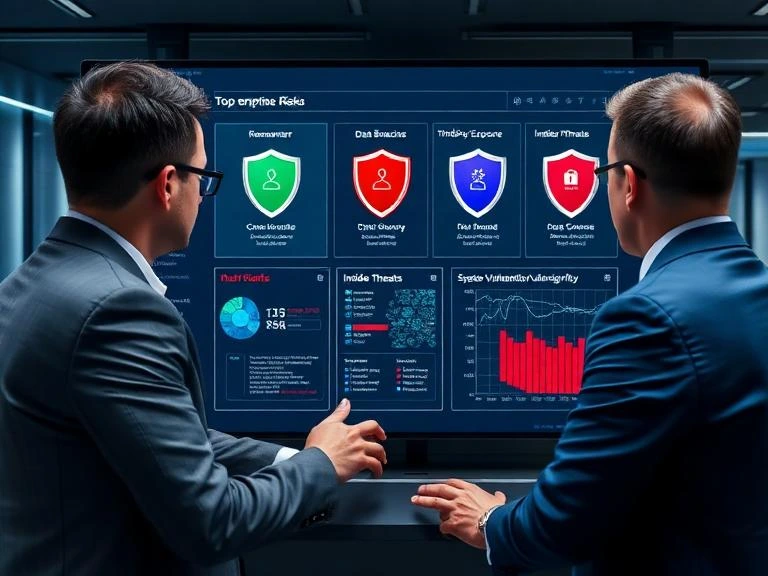
In today’s digital landscape, cybersecurity risks have emerged as a critical concern for enterprises worldwide. When considering enterprise risk examples, cybersecurity threats have become especially significant. As organizations increasingly rely on technology to drive growth and innovation, they become more vulnerable to cyber threats. Internal Audit plays a pivotal role in identifying and mitigating these risks, ensuring that an organization’s assets, data, and operations remain secure. This article explores the top five enterprise cybersecurity risks and provides actionable insights for IT Auditors, CIOs, and cybersecurity experts to enhance their risk management strategies [1].
Top 5 Enterprise Cybersecurity Risks
Considering enterprise risk examples, as enterprise risk managers and internal auditors, it is essential to stay vigilant against the evolving landscape of cybersecurity threats. Here are the top five enterprise cybersecurity risks that require immediate attention:
Risk #1: Phishing and Social Engineering Attacks
- Overview: Phishing and social engineering attacks are among the most common and damaging cyber threats. They trick users into divulging sensitive information or performing actions that compromise security.
- Mitigation Strategies:
- Implement robust email filtering systems.
- Conduct regular phishing simulations.
- Educate employees on identifying suspicious communications.
Risk #2: Insider Threats and Data Breaches
- Overview: For enterprise risk examples, insider threats can be equally as devastating as external attacks, with employees mishandling or misusing confidential information.
- Mitigation Strategies:
- Implement strict access controls.
- Conduct regular background checks.
- Enforce data handling policies.
Risk #3: Ransomware and Malware Attacks
- Overview: Ransomware and malware attacks involve encrypting or corrupting critical systems and data, leading to significant downtime and financial losses.
- Mitigation Strategies:
- Use robust antivirus software.
- Conduct regular vulnerability assessments.
- Back up critical data frequently.
Risk #4: Cloud Security Risks and Compliance Issues
- Overview: Considering enterprise risk examples, as enterprises migrate to the cloud, they face new security risks and compliance challenges, including unauthorized access and data breaches.
- Mitigation Strategies:
- Implement strong cloud security controls.
- Conduct regular penetration testing.
- Ensure cloud providers comply with necessary regulations.
Risk #5: Advanced Persistent Threats (APTs)
- Overview: APTs are sophisticated attacks often sponsored by nation-states, aiming to exploit vulnerabilities in an organization’s network.
- Mitigation Strategies:
- Develop robust incident response plans.
- Conduct regular vulnerability assessments.
- Monitor networks for suspicious activity.
Phishing and Social Engineering Attacks
Focusing on enterprise risk examples, phishing and social engineering attacks have become increasingly sophisticated, posing significant risks to enterprises. Understanding these threats is crucial for internal auditors to effectively assess and mitigate related risks [2] .
Types of Phishing Attacks
- Email Phishing: Deceptive emails that appear legitimate, tricking employees into divulging sensitive information.
- Phone Phishing (Vishing): Scammers impersonate trusted individuals over the phone to extract sensitive information.
- Text Message Phishing (Smishing): Attackers send SMS messages that prompt employees to take action, often leading to compromised data.
Common Tactics Used by Attackers
- Using company logos and branding to deceive employees.
- Exploiting employee trust by posing as colleagues or IT personnel.
- Creating a false sense of urgency to prompt quick actions.
Consequences of a Successful Attack
- Data breaches leading to compromised sensitive information.
- Financial losses due to unauthorized transactions or ransom payments.
- Reputational damage affecting customer trust.
Insider Threats and Data Breaches
Considering enterprise risk examples, insider threats and data breaches pose significant challenges for organizations. Understanding the causes and types of insider threats is essential for effective risk management [3].
Types of Insider Threats
- Malicious Insiders: Employees who intentionally exploit their access for personal gain.
- Accidental Insiders: Unintentional actions that compromise security due to lack of training.
- Compromised Accounts: Legitimate accounts accessed by unauthorized parties through phishing or other tactics.
Causes of Data Breaches
- Human Error: Mistakes due to insufficient training or awareness.
- System Vulnerabilities: Weaknesses in system design or maintenance.
- Lack of Access Controls: Insufficient controls allowing unauthorized access.
Ransomware and Malware Attacks
For enterprise risk examples, ransomware and malware attacks are significant risks for enterprises, with far-reaching consequences. Understanding the types of malware is key to effective risk management.
Types of Malware
- Viruses: Self-replicating malware that attaches to other programs.
- Trojans: Disguised malware granting unauthorized access.
- Spyware: Steals sensitive information.
- Adware: Displays unwanted advertisements.
- Ransomware: Encrypts files and demands payment for decryption.
Consequences of a Successful Attack
- Data loss and system downtime.
- Significant financial losses due to ransom payments or recovery costs.
Cloud Security Risks and Compliance Issues
Looking at enterprise risk examples, cloud security risks and compliance challenges are critical for organizations transitioning to cloud-based infrastructure. Understanding these risks is essential for internal audit professionals [4].
Types of Cloud Security Risks
- Data Breaches: Unauthorized access to sensitive data due to inadequate controls.
- Unauthorized Access: Risks associated with shared resources and multi-tenancy.
- Configuration Errors: Misconfigured cloud infrastructure leading to vulnerabilities.
Compliance Challenges
- GDPR: Data protection regulation affecting organizations processing EU citizens’ data.
- HIPAA: Regulations for handling sensitive health information.
- PCI-DSS: Standards for protecting payment card data.
Advanced Persistent Threats (APTs)
APTs represent a significant threat to enterprise risk management. Understanding the types and consequences of APTs is crucial for effective mitigation.
Types of APTs
- Nation-state Sponsored Attacks: Targeting organizations for intelligence or disruption.
- Organized Crime Groups: Focusing on financial gain through sophisticated attacks.
- Hacktivists: Targeting organizations for ideological reasons.
Consequences of a Successful Attack
- Long-term data loss and system compromise.
- Reputational damage affecting customer trust.
Mitigation Strategies
For enterprise risk examples, to effectively mitigate the risks identified, organizations should adopt the following strategies [5]:
- Implement Robust Security Controls: Develop policies governing user access and authentication.
- Conduct Regular Security Audits: Identify vulnerabilities through comprehensive assessments.
- Train Employees on Cybersecurity Best Practices: Provide ongoing education to enhance awareness.
Key Takeaways
- Cybersecurity risks are a critical concern for enterprises.
- Internal Audit plays a vital role in identifying and mitigating these risks.
- Proactive measures are essential for protecting organizational assets and ensuring compliance.
FAQ
Q: What are the most common types of cyber threats?
A: The most common types of cyber threats include phishing attacks, insider threats, ransomware, cloud security risks, and advanced persistent threats (APTs).
Q: How can Internal Audit help mitigate cybersecurity risks?
A: Internal Audit can help by conducting risk assessments, evaluating the effectiveness of controls, and providing recommendations for improvement.
Conclusion
In conclusion, focusing on enterprise risk examples, the importance of proactive cybersecurity measures cannot be overstated. The increasing frequency and sophistication of cyberattacks necessitate a robust approach to risk management. Internal Audit plays a crucial role in this effort by providing independent assessments and recommendations. By implementing effective security controls, conducting regular audits, and fostering a culture of cybersecurity awareness, organizations can significantly reduce their exposure to cyber risks and maintain the trust of stakeholders and customers.
Find out more about Shaun Stoltz https://www.shaunstoltz.com/about/
This post was written by an AI and reviewed/edited by a human.