Introduction to PMP Certification
The Project Management Professional (PMP) certification stands as a prestigious credential that signifies a project manager’s expertise and commitment to the profession. This certification is awarded by the Project Management Institute (PMI), a globally recognized organization dedicated to advancing the practice and profession of project management.
Definition of PMP Certification
PMP certification is a globally recognized credential that demonstrates a project manager’s ability to lead and direct projects effectively. It validates the knowledge, skills, and experience required to manage projects successfully, covering various methodologies and practices. The certification is based on the PMI’s Project Management Body of Knowledge (PMBOK), which outlines the standards and best practices in project management.
Overview of the Project Management Institute (PMI)
The Project Management Institute (PMI) is a leading professional association for project managers, founded in 1969. PMI plays a crucial role in the project management community by providing resources, education, and certification programs. It aims to advance the profession through research, advocacy, and the development of standards. PMI’s PMBOK Guide serves as a foundational resource for project management practices and is integral to the PMP certification process.
Importance of PMP Certification in Traditional Project Management
PMP certification holds significant importance in traditional project management for several reasons:
- Standardization of Practices: PMP certification promotes a standardized approach to project management, ensuring that project managers are equipped with a common set of skills and knowledge. This standardization is essential for organizations that operate in diverse industries and require consistency in project execution.
- Enhanced Career Opportunities: Holding a PMP certification can significantly enhance a project manager’s career prospects. Many organizations prefer or require PMP certification for project management roles, as it demonstrates a commitment to the profession and a high level of competence.
- Credibility and Recognition: The PMP certification is widely recognized across industries and geographies, providing project managers with credibility among peers, stakeholders, and employers. It signals a commitment to professional development and adherence to best practices in project management.
- Networking Opportunities: Being a part of the PMI community allows certified professionals to connect with other project managers, share experiences, and gain insights into industry trends. This networking can lead to new opportunities and collaborations.
PMP certification is a vital credential for project managers, particularly those working within traditional project management frameworks. As the industry evolves, integrating Agile methodologies with PMP principles can further enhance the effectiveness of project management practices, making it essential for project managers to understand both traditional and modern approaches.
Understanding Agile Methodologies
Agile methodologies have emerged as a vital approach that complements traditional practices, such as those outlined in the Project Management Professional (PMP) certification. This section aims to clarify what Agile is, its core principles, popular frameworks, and how it contrasts with traditional project management.
Definition of Agile and Its Core Principles
Agile is a project management philosophy that emphasizes flexibility, collaboration, and customer-centricity. It is designed to accommodate change and deliver value incrementally. The core principles of Agile, as outlined in the Agile Manifesto, include:
- Individuals and Interactions Over Processes and Tools: Agile prioritizes team collaboration and communication, recognizing that effective teamwork is crucial for project success.
- Working Software Over Comprehensive Documentation: While documentation is important, Agile focuses on delivering functional products quickly, allowing for iterative improvements based on user feedback.
- Customer Collaboration Over Contract Negotiation: Agile encourages ongoing engagement with stakeholders to ensure that the project aligns with their needs and expectations.
- Responding to Change Over Following a Plan: Agile methodologies embrace change, allowing teams to adapt to new information and shifting requirements throughout the project lifecycle.
These principles foster an environment where teams can be more responsive and innovative, ultimately leading to higher customer satisfaction.
Overview of Popular Agile Frameworks
Several frameworks embody Agile principles, each with its unique approach to project management. Some of the most widely adopted frameworks include:
- Scrum: This framework divides projects into time-boxed iterations called sprints, typically lasting two to four weeks. Scrum emphasizes roles such as the Scrum Master and Product Owner, facilitating regular ceremonies like daily stand-ups and sprint reviews to enhance team collaboration and accountability.
- Kanban: Kanban focuses on visualizing work in progress and managing flow. It uses a board to represent tasks, allowing teams to limit work in progress and optimize efficiency. This framework is particularly effective for teams that require flexibility and continuous delivery.
- Extreme Programming (XP): XP is a software development methodology that emphasizes technical excellence and customer satisfaction. It incorporates practices such as pair programming, test-driven development, and frequent releases to improve product quality and responsiveness.
- Lean: Lean principles aim to maximize value by minimizing waste. This approach encourages teams to streamline processes, enhance efficiency, and focus on delivering what the customer truly needs.
Differences Between Traditional Project Management and Agile Approaches
The transition from traditional project management to Agile methodologies involves significant shifts in mindset and practice. Key differences include:
- Planning and Execution: Traditional project management often relies on detailed upfront planning and a linear execution model, whereas Agile promotes iterative planning and execution, allowing for adjustments based on real-time feedback.
- Role of the Project Manager: In traditional settings, the project manager typically holds a central authority, making decisions and directing the team. In Agile, the focus shifts to collaboration, with roles like Scrum Master facilitating rather than directing.
- Change Management: Traditional methodologies often view changes as disruptions, while Agile embraces change as a natural part of the process, allowing teams to pivot quickly in response to new information or stakeholder feedback.
- Success Metrics: Traditional project management often measures success through adherence to scope, time, and budget. In contrast, Agile emphasizes delivering value to the customer and achieving high levels of satisfaction, often measured through customer feedback and product usability.
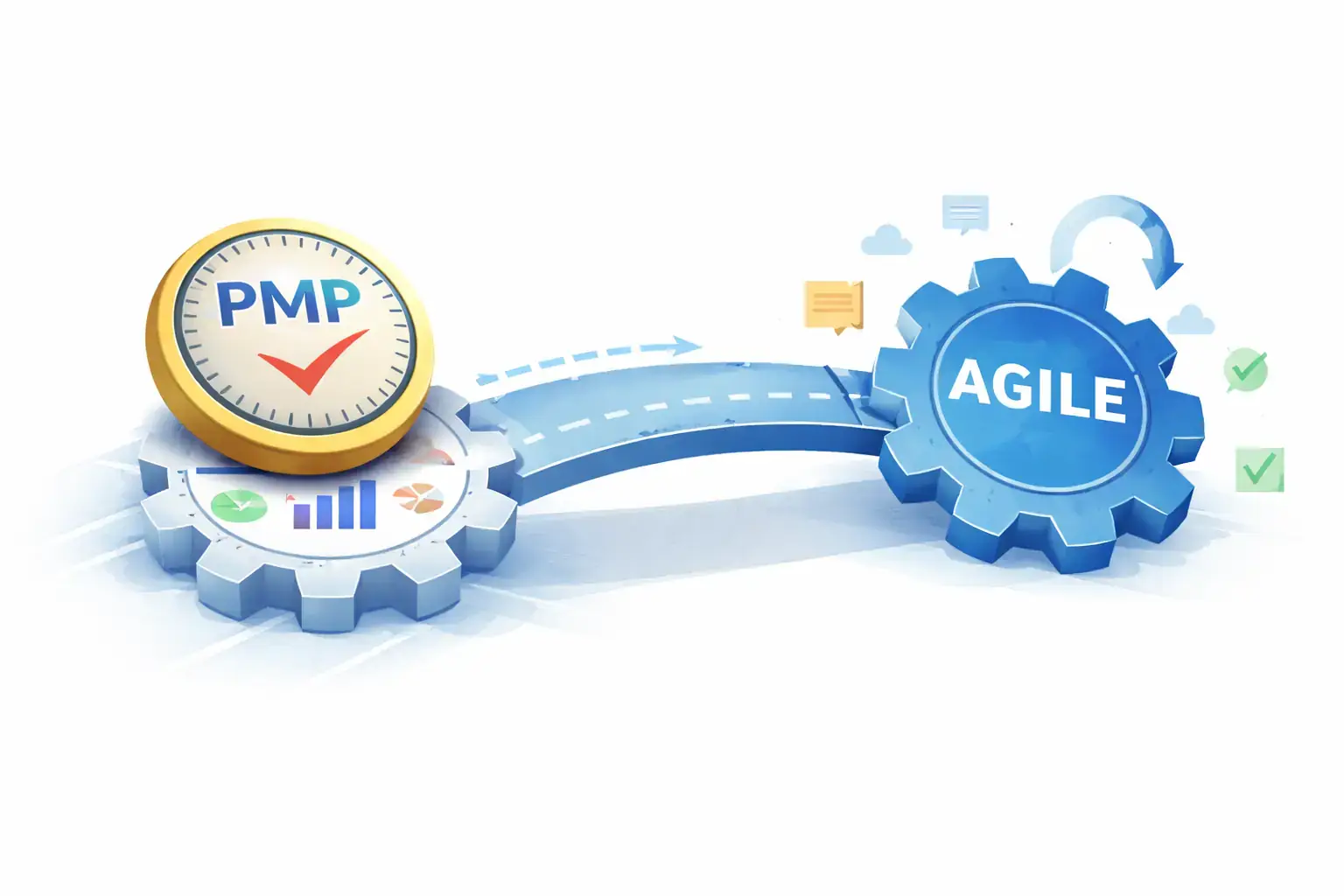
Understanding Agile methodologies is essential for project managers transitioning to Agile practices. By integrating Agile principles with PMP certification knowledge, project managers can effectively bridge the gap between traditional and modern project management approaches, enhancing their ability to deliver successful projects in a dynamic environment.
The Intersection of PMP Certification and Agile
The integration of traditional methodologies like the Project Management Professional (PMP) certification with modern approaches such as Agile has become increasingly relevant. For project managers transitioning to Agile practices, understanding how PMP principles can complement Agile methodologies is crucial. Here are some key points to consider:
Key Similarities Between PMP and Agile Methodologies
- Focus on Deliverables: Both PMP and Agile emphasize delivering value to stakeholders. While PMP outlines a structured approach to project management, Agile prioritizes iterative delivery, ensuring that each increment adds value to the project outcome.
- Stakeholder Engagement: Effective communication and stakeholder involvement are central to both methodologies. PMP encourages stakeholder identification and engagement throughout the project lifecycle, while Agile promotes continuous collaboration with stakeholders to adapt to changing requirements.
- Risk Management: Both approaches recognize the importance of risk management. PMP provides a comprehensive framework for identifying and mitigating risks, while Agile incorporates risk assessment into each iteration, allowing teams to respond quickly to potential issues.
How PMP Principles Can Enhance Agile Project Management
- Structured Framework: PMP certification equips project managers with a structured framework that can enhance Agile practices. For instance, understanding project scope, time, and cost management can help Agile teams maintain focus on project goals while being flexible in their execution.
- Quality Management: PMP principles emphasize quality assurance and control, which can be integrated into Agile practices. By applying quality management techniques from PMP, Agile teams can ensure that deliverables meet the required standards and stakeholder expectations.
- Comprehensive Planning: While Agile promotes adaptive planning, PMP principles encourage thorough initial planning. This can help Agile teams establish a clear vision and roadmap, allowing for more effective sprint planning and execution.
The intersection of PMP certification and Agile methodologies offers a unique opportunity for project managers to leverage the strengths of both approaches. By understanding the similarities and integrating PMP principles into Agile practices, project managers can enhance their effectiveness and drive successful project outcomes in a rapidly changing environment.
Benefits of PMP Certification for Agile Practitioners
The integration of Agile methodologies with traditional practices is becoming increasingly vital. For project managers transitioning to Agile environments, obtaining a Project Management Professional (PMP) certification can provide significant advantages. Here are some key benefits of having a PMP certification while working in Agile settings:
- Enhanced Understanding of Project Management Processes: The PMP certification equips practitioners with a comprehensive understanding of project management processes, tools, and techniques. This foundational knowledge is crucial when implementing Agile practices, as it allows project managers to appreciate the nuances of both traditional and Agile methodologies. By understanding the full project lifecycle, Agile practitioners can better navigate the complexities of project execution and delivery, ensuring that Agile principles are effectively integrated into their workflows.
- Ability to Apply Hybrid Project Management Approaches: With the rise of hybrid project management models that combine Agile and traditional methodologies, PMP-certified professionals are well-positioned to leverage the strengths of both approaches. The certification provides the skills necessary to assess project requirements and determine the most effective management style. This flexibility enables project managers to tailor their strategies to meet the specific needs of their projects, fostering a more adaptive and responsive project environment.
- Increased Credibility and Career Advancement Opportunities: Holding a PMP certification enhances a project manager’s credibility in the eyes of employers and stakeholders. It signifies a commitment to professional development and a mastery of project management principles. In Agile environments, where collaboration and communication are key, having a recognized certification can help project managers stand out in a competitive job market. This increased credibility often translates into better career advancement opportunities, as organizations seek professionals who can bridge the gap between traditional project management and Agile practices.
The PMP certification offers Agile practitioners a robust framework for understanding project management processes, the ability to implement hybrid approaches, and enhanced credibility that can lead to career growth. As organizations continue to embrace Agile methodologies, the value of PMP certification in this context will only increase, making it a worthwhile investment for project managers looking to thrive in modern project environments.
Challenges in Merging PMP and Agile Practices
Integrating PMP (Project Management Professional) certification principles with Agile methodologies presents a unique set of challenges for project managers. As organizations increasingly adopt Agile practices to enhance flexibility and responsiveness, those with a PMP background may encounter several obstacles during this transition. Here are some key challenges to consider:
- Cultural Resistance within Organizations: One of the most significant hurdles is the cultural shift required to embrace Agile methodologies. Traditional project management often emphasizes a structured, hierarchical approach, which can clash with Agile’s focus on collaboration, adaptability, and self-organizing teams. Employees accustomed to established processes may resist changes, fearing a loss of control or clarity in their roles. Overcoming this resistance necessitates strong leadership and a commitment to fostering an Agile mindset throughout the organization.
- Balancing Structure with Flexibility: PMP certification emphasizes the importance of planning, documentation, and adherence to processes. In contrast, Agile methodologies prioritize flexibility and iterative progress. This dichotomy can create tension as project managers strive to maintain necessary structure while allowing for the adaptability that Agile demands. Finding the right balance is crucial; project managers must learn to apply PMP principles in a way that supports Agile practices without stifling innovation or responsiveness.
- Training and Knowledge Gaps Among Team Members: Transitioning to Agile often requires team members to acquire new skills and knowledge. Project managers with PMP certification may find that their teams lack familiarity with Agile frameworks such as Scrum or Kanban. This knowledge gap can hinder effective implementation and lead to misunderstandings about roles, responsibilities, and processes. To address this challenge, organizations should invest in comprehensive training programs that equip team members with the necessary Agile skills and foster a shared understanding of Agile principles.
While merging PMP certification principles with Agile methodologies can enhance project management practices, it is essential to recognize and address the challenges that may arise. By fostering a supportive culture, balancing structure with flexibility, and investing in training, project managers can successfully navigate the complexities of this integration and lead their teams toward greater agility and effectiveness.
Strategies for Effective Integration
Integrating PMP certification principles with Agile methodologies can significantly enhance project management practices, especially for project managers transitioning to Agile. Here are some actionable strategies to effectively blend these two approaches:
1. Creating a Hybrid Project Management Framework
- Define Clear Objectives: Establish a framework that combines the structured approach of PMP with the flexibility of Agile. This involves setting clear project goals and deliverables while allowing for iterative progress and adaptability.
- Tailor Methodologies: Customize the project management processes to fit the specific needs of the project. For instance, use Agile sprints for development phases while applying PMP’s risk management techniques to identify and mitigate potential issues early on.
- Integrate Best Practices: Leverage best practices from both methodologies. For example, utilize PMP’s comprehensive planning and documentation alongside Agile’s emphasis on customer feedback and iterative development to ensure thoroughness and responsiveness.
2. Fostering a Culture of Collaboration and Continuous Improvement
- Encourage Team Collaboration: Promote an environment where team members feel empowered to share ideas and feedback. This can be achieved through regular stand-up meetings, retrospectives, and collaborative tools that facilitate communication.
- Implement Continuous Improvement Practices: Adopt Agile’s principle of continuous improvement by regularly reviewing processes and outcomes. Use lessons learned from each project phase to refine practices and enhance team performance.
- Training and Development: Invest in training sessions that educate team members on both PMP and Agile principles. This dual knowledge base will help foster a collaborative culture where team members can effectively contribute to both structured and flexible project management practices.
3. Leveraging Tools and Technology to Support Integration
- Utilize Project Management Software: Implement tools that support both PMP and Agile methodologies. Software like Jira or Trello can help manage Agile tasks while also allowing for Gantt charts and other PMP tools to track project timelines and dependencies.
- Data Analytics for Decision Making: Use data analytics tools to gather insights from project performance. This can help project managers make informed decisions based on real-time data, aligning with Agile’s responsiveness while adhering to PMP’s analytical rigor.
- Automate Processes: Leverage automation tools to streamline repetitive tasks, allowing project managers to focus on strategic planning and team collaboration. Automation can enhance efficiency and reduce the administrative burden associated with traditional project management.
By implementing these strategies, project managers can effectively bridge the gap between PMP certification principles and Agile methodologies, creating a robust project management framework that is both structured and adaptable. This integration not only enhances project outcomes but also fosters a more dynamic and responsive project environment.
Conclusion
The integration of PMP certification principles with Agile methodologies presents a unique opportunity for project managers to enhance their skills and adapt to modern practices. Here are the key takeaways from our discussion:
- Benefits of Integration: Combining the structured approach of PMP with the flexibility of Agile allows project managers to leverage the strengths of both methodologies. This integration fosters improved communication, adaptability, and stakeholder engagement, ultimately leading to more successful project outcomes. By understanding the rigorous planning and execution strategies of PMP, Agile practitioners can better manage risks and ensure that projects remain aligned with organizational goals.
Embracing both PMP certification and Agile practices can position you as a versatile project manager, ready to tackle the challenges of today’s dynamic project environments. By blending the best of both worlds, you can drive your projects to success while remaining adaptable to the ever-changing demands of the industry.
Find out more about Shaun Stoltz https://www.shaunstoltz.com/about/.
This post was written by an AI and reviewed/edited by a human.