Introduction
Digital transformation has become a critical focus for organizations seeking to enhance their operational efficiency, improve customer experiences, and maintain competitive advantage. In the context of project management, digital transformation refers to the integration of digital technologies into all areas of a business, fundamentally changing how organizations operate and deliver value to customers. This shift not only involves adopting new technologies but also necessitates a cultural change that requires organizations to continually challenge the status quo and experiment with new approaches.
Given the complexity and scope of digital transformation initiatives, effective risk management is paramount. Risk management in this context involves identifying, assessing, and mitigating risks that could impede the success of digital projects. The significance of risk management cannot be overstated; it serves as a safeguard against potential pitfalls that could derail projects, lead to financial losses, or damage an organization’s reputation. By proactively addressing risks, project managers can ensure that digital initiatives are not only completed on time and within budget but also achieve their intended outcomes.
Digital transformation projects are inherently unique, presenting a distinct set of risks that differ from traditional project management scenarios. These risks may include technological uncertainties, resistance to change from employees, data security concerns, and the challenge of aligning digital initiatives with existing business processes. Understanding these unique risks is essential for project leaders and risk managers, as it enables them to develop tailored strategies that address the specific challenges posed by digital transformation. By recognizing and managing these risks effectively, organizations can navigate the complexities of digital transformation and unlock the full potential of their digital initiatives.
Understanding Digital Transformation Risks
Digital transformation projects are inherently complex and fraught with unique risks that can significantly impact their success. As organizations strive to innovate and adapt to the digital environment, project managers must be vigilant in identifying and categorizing these risks. Below are the key types of risks associated with digital transformation initiatives, along with insights into their dynamic nature and real-world implications.
Common Risks in Digital Transformation Projects
- Technological Risks:
- Integration Challenges: New technologies must seamlessly integrate with existing systems. Failure to do so can lead to operational disruptions.
- Cybersecurity Threats: As organizations digitize, they become more vulnerable to cyberattacks, which can compromise sensitive data and disrupt services.
- Obsolescence: Rapid technological advancements can render new solutions outdated quickly, necessitating continuous updates and investments.
- Operational Risks:
- Process Disruption: Implementing new digital tools can disrupt established workflows, leading to inefficiencies and potential service delays.
- Skill Gaps: Employees may lack the necessary skills to utilize new technologies effectively, resulting in decreased productivity and morale.
- Organizational Risks:
- Resistance to Change: Employees and stakeholders may resist new processes or technologies, hindering adoption and implementation efforts.
- Cultural Misalignment: A mismatch between the organization’s culture and the demands of digital transformation can lead to conflict and disengagement.
- Market-Related Risks:
- Competitive Pressure: The fast-paced nature of digital markets means that organizations must continuously innovate to stay relevant, which can strain resources.
- Customer Expectations: As digital solutions evolve, customer expectations also rise, and failure to meet these can result in lost business.
The Dynamic Nature of Digital Projects
Digital transformation projects are characterized by their fluidity and the rapid pace of change. This dynamic environment means that risks can emerge unexpectedly, requiring project managers to be agile and responsive. For instance, shifts in technology trends or market demands can necessitate a pivot in strategy, which may not have been anticipated during the initial planning phase. This unpredictability underscores the importance of continuous risk assessment and management throughout the project lifecycle.
Real-World Examples of Digital Transformation Failures
Several high-profile digital transformation initiatives have faltered due to overlooked risks:
- Target’s Canadian Expansion: Target’s attempt to enter the Canadian market was marred by technological failures, including inventory management issues and a lack of understanding of local consumer preferences. These operational and market-related risks led to significant financial losses and ultimately the closure of its Canadian stores.
- Kodak’s Digital Misstep: Despite being a pioneer in digital photography, Kodak failed to adapt its business model in time, leading to its decline. The company’s inability to recognize the operational and market risks associated with the shift to digital photography resulted in a loss of market share to more agile competitors.
- General Electric’s Digital Strategy: GE’s ambitious digital transformation aimed to position the company as a leader in the Industrial Internet. However, the initiative faced significant operational and organizational challenges, including a lack of clear strategy and internal resistance, leading to substantial financial losses and a reevaluation of its digital goals.
Understanding and managing the unique risks associated with digital transformation projects is crucial for project managers and risk leaders. By categorizing these risks and remaining adaptable to the ever-changing digital environment, organizations can enhance their chances of successful transformation and sustainable growth.
Strategies for Effective Risk Identification
Project managers face a unique set of challenges that require a proactive approach to risk management. Identifying risks early in the project lifecycle is crucial for ensuring the success of digital initiatives. Here are several strategies that can help project managers effectively identify risks associated with digital transformation projects:
- Conduct Brainstorming Sessions and Workshops: Organizing brainstorming sessions and workshops with cross-functional teams is an effective way to surface potential risks. By bringing together diverse perspectives from various departments—such as IT, marketing, operations, and finance—project managers can foster an environment where team members feel comfortable sharing their insights and concerns. This collaborative approach not only enhances creativity but also helps in identifying risks that may not be immediately apparent to a single team or department.
- Utilize Risk Assessment Tools and Frameworks: Implementing risk assessment tools and frameworks specifically designed for digital initiatives can streamline the risk identification process. Tools such as SWOT analysis (Strengths, Weaknesses, Opportunities, Threats), risk matrices, and digital maturity assessments can provide structured methodologies for evaluating potential risks. These frameworks help project managers categorize risks based on their likelihood and impact, allowing for a more focused approach to risk management.
- Encourage Stakeholder Engagement: Engaging stakeholders throughout the project is essential for uncovering hidden risks. Stakeholders, including customers, end-users, and executive sponsors, can provide valuable insights into potential challenges and concerns that may arise during the digital transformation process. Regular check-ins, feedback sessions, and surveys can facilitate open communication and ensure that all voices are heard. By actively involving stakeholders, project managers can identify risks related to user adoption, technology integration, and market dynamics that might otherwise go unnoticed.
By implementing these strategies, project managers can enhance their ability to identify risks early in digital transformation projects. This proactive approach not only mitigates potential issues but also contributes to the overall success and sustainability of digital initiatives.
Risk Assessment and Prioritization Techniques
Project managers face a unique set of challenges that require a nuanced approach to risk management. Understanding and effectively managing these risks is crucial for the success of digital initiatives. This section will explore various techniques for assessing and prioritizing risks, providing project managers with the tools they need to navigate the complexities of digital transformation projects.
Qualitative and Quantitative Risk Assessment Methods
- Qualitative Risk Assessment:
- This method involves identifying and evaluating risks based on their likelihood of occurrence and potential impact. It is often conducted through brainstorming sessions, expert interviews, and workshops.
- Risks are typically categorized as high, medium, or low based on subjective judgment, which allows for a quick assessment of potential threats without extensive data analysis.
- Quantitative Risk Assessment:
- In contrast, quantitative assessment relies on numerical data to evaluate risks. This method uses statistical techniques to estimate the probability of risks and their potential financial impact.
- Tools such as Monte Carlo simulations and decision tree analysis can provide project managers with a clearer picture of risk exposure and help in making informed decisions.
Risk Matrices and Scoring Systems
- Risk Matrices:
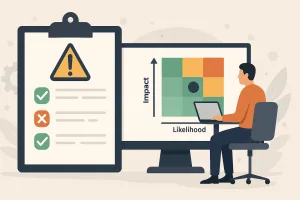
- A risk matrix is a visual tool that helps project managers plot risks based on their likelihood and impact. By categorizing risks into a grid, managers can easily identify which risks require immediate attention and which can be monitored over time.
- For example, risks that fall into the “high likelihood/high impact” quadrant should be prioritized for mitigation strategies, while those in the “low likelihood/low impact” quadrant may require less immediate action.
- Scoring Systems:
- Implementing a scoring system can further enhance the prioritization process. Each risk can be assigned a score based on predefined criteria, such as severity, likelihood, and detectability.
- This scoring allows for a more objective comparison of risks, enabling project managers to allocate resources effectively and focus on the most critical threats to the project’s success.
Importance of Continuous Risk Assessment
- Ongoing Evaluation:
- Digital transformation projects are dynamic and often subject to rapid changes in technology, market conditions, and organizational priorities. Therefore, continuous risk assessment is essential throughout the project lifecycle.
- Regularly revisiting the risk assessment process allows project managers to identify new risks as they emerge and reassess existing risks based on the latest information.
- Adaptive Strategies:
- By fostering a culture of continuous risk management, project teams can adapt their strategies in real-time, ensuring that they remain responsive to evolving challenges. This proactive approach not only mitigates potential issues but also enhances the overall resilience of the project.
Effective risk assessment and prioritization are vital components of successful digital transformation project management. By employing both qualitative and quantitative methods, utilizing risk matrices and scoring systems, and committing to continuous evaluation, project managers can navigate the unique risks associated with digital initiatives and drive their projects toward success.
Developing a Risk Response Plan
Project managers face a unique set of risks that can significantly impact the success of their initiatives. To navigate these challenges effectively, it is essential to develop a comprehensive risk response plan. This section outlines key strategies for managing risks associated with digital transformation projects, focusing on actionable plans that can mitigate identified risks.
Define Risk Response Strategies
- Avoidance: This strategy involves altering the project plan to eliminate the risk or protect the project objectives from its impact. For instance, if a digital transformation project is at risk due to outdated technology, a project manager might choose to invest in new technology before proceeding, thereby avoiding potential delays and cost overruns.
- Mitigation: Mitigation strategies aim to reduce the likelihood or impact of a risk. For example, if there is a risk of data breaches during a digital transformation, implementing robust cybersecurity measures and conducting regular security audits can help mitigate this risk.
- Transfer: This strategy involves shifting the risk to a third party, often through outsourcing or insurance. For instance, a project manager might transfer the risk of software failure by partnering with a reputable vendor who guarantees performance and support.
- Acceptance: In some cases, the best course of action is to accept the risk, particularly if the potential impact is minimal or if the cost of mitigation is too high. For example, a project manager might accept the risk of minor delays in a digital rollout if the overall benefits outweigh the drawbacks.
Examples of Risk Response Plans Specific to Digital Transformation
- Data Migration Risks: A project manager may develop a risk response plan that includes a phased approach to data migration, ensuring that data integrity is maintained at each stage. This could involve running parallel systems temporarily to validate data accuracy before fully transitioning to the new system.
- Change Management Risks: To address resistance to change among employees, a project manager might implement a comprehensive change management strategy that includes training sessions, regular communication, and feedback mechanisms to engage stakeholders throughout the transformation process.
- Technology Integration Risks: When integrating new digital tools with existing systems, a risk response plan could involve conducting thorough compatibility testing and establishing a rollback plan in case the integration fails, ensuring that operations can continue smoothly.
The Role of Contingency Planning in Managing Unforeseen Events
Contingency planning is a critical component of risk management in digital transformation projects. It involves preparing for unexpected events that could derail the project. Effective contingency plans should include:
- Scenario Analysis: Project managers should conduct scenario analyses to identify potential unforeseen events and their impacts. This proactive approach allows teams to develop tailored responses for various scenarios, such as sudden changes in market conditions or technological failures.
- Resource Allocation: Allocating resources for contingency measures is essential. This could involve setting aside a budget for emergency expenses or designating team members to focus on crisis management.
- Regular Review and Updates: Contingency plans should not be static. Regular reviews and updates ensure that the plans remain relevant and effective in the face of evolving risks and project dynamics.
By implementing these strategies and developing a robust risk response plan, project managers can better navigate the complexities of digital transformation initiatives, ultimately leading to more successful outcomes.
Monitoring and Controlling Risks
Project managers face a unique set of challenges that require a proactive approach to risk management. As organizations pivot towards digital solutions, understanding and mitigating risks becomes paramount. This section emphasizes the importance of ongoing risk monitoring and provides strategies for effective risk management in digital transformation projects.
Establishing Key Performance Indicators (KPIs) for Risk Management
To effectively monitor risks, project managers should establish clear and measurable Key Performance Indicators (KPIs). These KPIs serve as benchmarks for assessing the health of the project and the effectiveness of risk management strategies. Here are some essential KPIs to consider:
- Risk Exposure: Measure the potential impact of identified risks on project objectives, including time, cost, and quality.
- Risk Mitigation Effectiveness: Evaluate the success of implemented risk responses by tracking the reduction in risk likelihood or impact.
- Issue Resolution Time: Monitor the time taken to resolve risks that have materialized into issues, providing insight into the responsiveness of the project team.
- Stakeholder Satisfaction: Gauge the satisfaction levels of stakeholders regarding risk management processes and communication, which can indicate the overall effectiveness of risk strategies.
By regularly reviewing these KPIs, project managers can gain insights into the risk subject matter and make informed decisions to adjust their strategies as needed.
Tools and Software for Real-Time Risk Tracking
In today’s digital age, leveraging technology is crucial for effective risk management. Various tools and software solutions can facilitate real-time risk tracking, enabling project managers to stay ahead of potential issues. Some popular options include:
- Risk Management Software: Tools like RiskWatch and Riskalyze provide comprehensive platforms for identifying, assessing, and monitoring risks throughout the project lifecycle.
- Project Management Tools: Software such as Asana, Trello, or Microsoft Project often include features for tracking risks alongside project tasks, allowing for integrated management.
- Dashboards and Reporting Tools: Utilizing business intelligence tools like Tableau or Power BI can help visualize risk data, making it easier to communicate risk status to stakeholders.
These tools not only streamline the risk management process but also enhance collaboration among team members, ensuring that everyone is informed and engaged in risk monitoring.
Regular Risk Review Meetings and Updates to the Risk Management Plan
To maintain an effective risk management strategy, it is essential to conduct regular risk review meetings. These meetings should involve key stakeholders and project team members to discuss the current risk assesment, review KPIs, and assess the effectiveness of risk responses. Here are some best practices for these meetings:
- Schedule Consistent Meetings: Establish a regular cadence for risk review meetings, whether weekly, bi-weekly, or monthly, depending on the project’s complexity and pace.
- Update the Risk Management Plan: After each meeting, ensure that the risk management plan is updated to reflect new risks, changes in risk status, and adjustments to mitigation strategies.
- Encourage Open Communication: Foster an environment where team members feel comfortable discussing risks and sharing insights, as this can lead to more effective risk identification and management.
By prioritizing ongoing risk monitoring and control, project managers can navigate the complexities of digital transformation projects more effectively, ultimately leading to successful project outcomes.
Conclusion
Project managers face a distinct set of challenges that necessitate a nuanced understanding of risk management. As organizations increasingly pivot towards digital initiatives, it is crucial to recognize the unique risks that accompany these projects, including technological uncertainties, data security concerns, and the potential for resistance to change among stakeholders.
- Unique Risks: Digital transformation projects often involve rapid technological advancements and integration of new systems, which can lead to unforeseen complications. Additionally, the reliance on data and digital tools raises significant concerns regarding cybersecurity and data privacy, making it imperative for project managers to be vigilant in identifying and mitigating these risks.
- Structured Approach: A structured approach to risk management is essential for navigating the complexities of digital transformation. This involves not only identifying potential risks early in the project lifecycle but also developing comprehensive risk assessment frameworks and response strategies. By implementing systematic processes, project managers can enhance their ability to anticipate challenges and respond effectively, thereby safeguarding project outcomes.
The unique risks associated with digital transformation projects require a proactive and structured approach to risk management. By embracing the strategies outlined, project managers can enhance their effectiveness and contribute to the successful realization of digital initiatives within their organizations.
Find out more about Shaun Stoltz https://www.shaunstoltz.com/about/.
This post was written by an AI and reviewed/edited by a human.