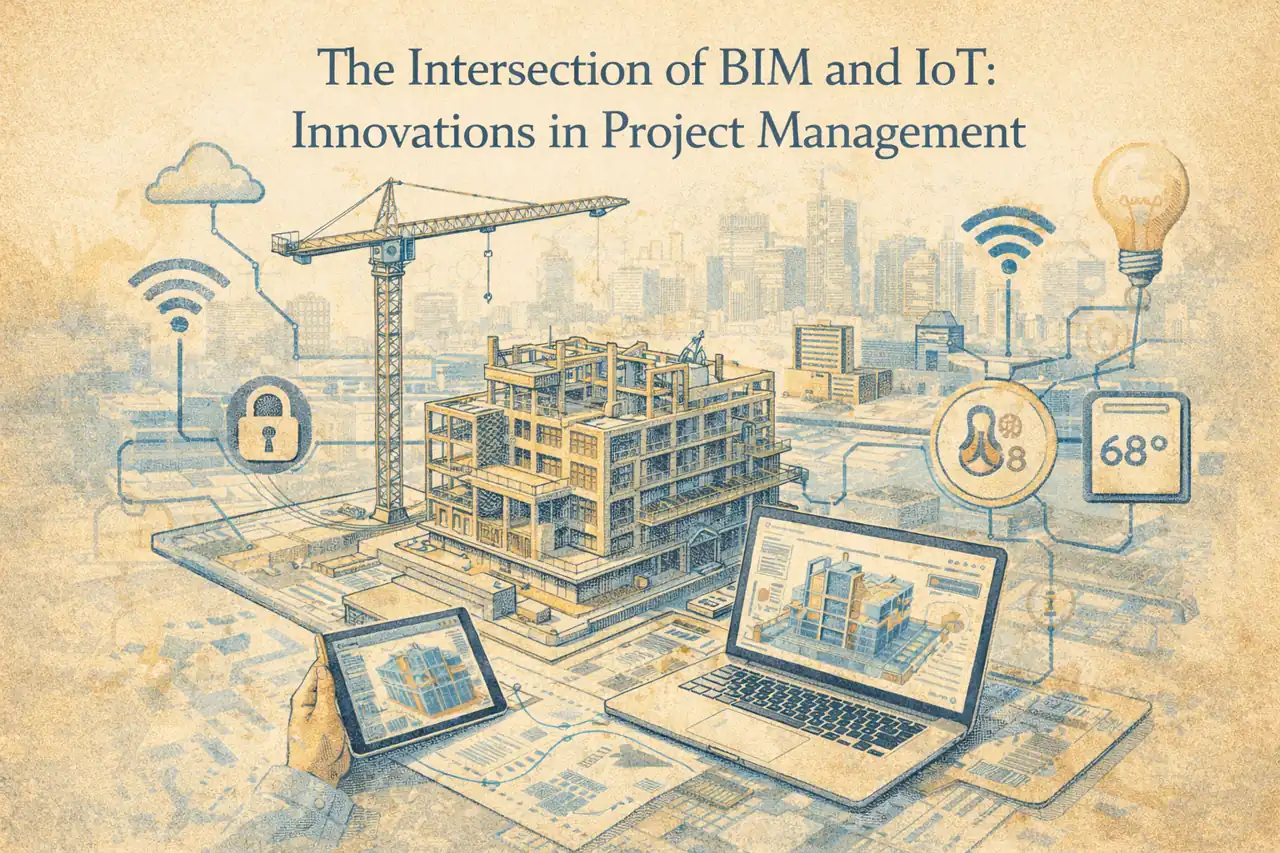
Introduction to BIM and IoT
Two technological advancements stand out for their transformative potential: Building Information Modeling (BIM) and the Internet of Things (IoT). Understanding these concepts and their integration is crucial for project managers and engineers aiming to enhance project efficiency and outcomes.
What is Building Information Modeling (BIM)?
Building Information Modeling (BIM) is a digital representation of the physical and functional characteristics of a facility. It serves as a shared knowledge resource for information about a facility, forming a reliable basis for decisions during its lifecycle, from inception onward. Key aspects of BIM include:
- Visualization: BIM allows for 3D modeling, enabling stakeholders to visualize the project before construction begins, which aids in identifying potential issues early.
- Collaboration: It fosters collaboration among various stakeholders, including architects, engineers, and contractors, by providing a centralized platform for sharing information.
- Lifecycle Management: BIM supports the entire lifecycle of a building, from design and construction to operation and maintenance, ensuring that all phases are well-coordinated and efficient.
In project management, BIM enhances planning, reduces costs, and improves communication, ultimately leading to more successful project delivery.
What is the Internet of Things (IoT)?
The Internet of Things (IoT) refers to the network of physical objects embedded with sensors, software, and other technologies that connect and exchange data with other devices and systems over the internet. In the context of construction and engineering, IoT plays a significant role by:
- Real-time Data Collection: IoT devices can monitor various parameters such as temperature, humidity, and structural integrity in real-time, providing valuable insights for project managers.
- Enhanced Safety: Wearable IoT devices can track worker health and safety, alerting managers to potential hazards on-site.
- Operational Efficiency: IoT can optimize resource usage and maintenance schedules, leading to reduced downtime and increased productivity.
The relevance of IoT in the construction sector lies in its ability to provide actionable data that can inform decision-making and improve project outcomes.
Integrating BIM with IoT Technologies
The integration of BIM with IoT technologies represents a significant advancement in project management. This synergy allows for:
- Enhanced Data Utilization: By combining BIM’s detailed models with IoT’s real-time data, project managers can make more informed decisions based on current conditions rather than relying solely on historical data.
- Predictive Analytics: The integration enables predictive maintenance and risk management, as IoT sensors can provide alerts about potential issues before they escalate, allowing for proactive measures.
- Improved Collaboration: With IoT data feeding into BIM models, all stakeholders can access up-to-date information, fostering better communication and collaboration throughout the project lifecycle.
The intersection of BIM and IoT is reshaping project management in the construction and engineering sectors. By leveraging these technologies, project managers can enhance efficiency, improve safety, and deliver projects that meet the evolving demands of the industry.
The Role of BIM in Project Management
Building Information Modeling (BIM) has revolutionized project management, particularly in the construction and engineering sectors. By integrating advanced visualization, collaboration, and data management capabilities, BIM enhances the efficiency and effectiveness of project management processes. Here’s a closer look at how BIM contributes to project management.
Capabilities of BIM in Visualization, Collaboration, and Data Management
- Visualization: BIM provides a 3D representation of a project, allowing stakeholders to visualize the end product before construction begins. This capability helps in identifying potential design flaws early in the process, reducing costly changes later on. Enhanced visualization tools enable project managers to present complex information in an easily digestible format, facilitating better decision-making.
- Collaboration: BIM fosters collaboration among various stakeholders, including architects, engineers, contractors, and clients. By using a shared digital model, all parties can access real-time updates and modifications, ensuring that everyone is on the same page. This collaborative environment minimizes misunderstandings and enhances communication, which is crucial for project success.
- Data Management: BIM serves as a central repository for all project-related data, including specifications, schedules, and costs. This centralized data management allows project managers to track progress, manage resources, and make informed decisions based on accurate information. The ability to analyze data trends over time also aids in forecasting future project needs and challenges.
Improvement in Project Planning, Execution, and Monitoring
- Project Planning: BIM enhances project planning by enabling detailed simulations of construction processes. Project managers can create timelines and allocate resources more effectively, leading to optimized workflows. The ability to visualize the project in its entirety allows for better risk assessment and mitigation strategies.
- Execution: During the execution phase, BIM tools facilitate real-time monitoring of construction activities. Project managers can track progress against the planned schedule, ensuring that any deviations are addressed promptly. This proactive approach helps in maintaining project timelines and budgets.
- Monitoring: BIM’s integration with IoT devices further enhances monitoring capabilities. Sensors can provide real-time data on various aspects of the construction site, such as equipment usage, environmental conditions, and worker safety. This data can be fed back into the BIM model, allowing for continuous updates and adjustments to project plans.
Real-World Examples of Successful BIM Implementations
- The Crossrail Project, UK: One of the largest infrastructure projects in Europe, Crossrail utilized BIM to manage the complexities of constructing a new railway line. The project team employed BIM for design coordination, clash detection, and construction planning, resulting in improved efficiency and reduced costs.
- The Sydney Opera House, Australia: Although completed decades ago, the Sydney Opera House has undergone renovations using BIM technology. The use of BIM allowed project managers to visualize the intricate design and manage the restoration process effectively, ensuring that the iconic structure was preserved while meeting modern standards.
- The One World Trade Center, USA: BIM played a crucial role in the construction of One World Trade Center. The project team used BIM for design visualization, construction sequencing, and facility management, which contributed to the project being completed on time and within budget.
BIM significantly enhances project management processes through its capabilities in visualization, collaboration, and data management. By improving project planning, execution, and monitoring, BIM not only streamlines workflows but also leads to successful project outcomes. As technology continues to evolve, the integration of BIM with IoT will further transform project management, paving the way for smarter, more efficient construction practices.
Understanding IoT in Construction and Engineering
The integration of the Internet of Things (IoT) with Building Information Modeling (BIM) is revolutionizing project management in the construction industry. By leveraging IoT technologies, project managers and engineers can enhance their capabilities, streamline operations, and improve safety on construction sites. Here’s a closer look at how IoT functions within this context and the benefits it brings to the construction sector.
Real-Time Data Collection and Transmission
IoT devices are pivotal in collecting and transmitting data in real-time, which is essential for effective project management. These devices include sensors, cameras, and smart equipment that monitor various parameters on construction sites.
- Data Collection: IoT sensors can gather data on equipment performance, environmental conditions, and worker safety. For instance, temperature and humidity sensors can monitor site conditions, while GPS trackers can provide real-time location data for machinery and materials.
- Data Transmission: The collected data is transmitted to centralized systems where it can be analyzed. This real-time data flow allows project managers to make informed decisions quickly, addressing issues as they arise rather than after the fact.
Applications of IoT in Managing Construction Sites
The applications of IoT in construction are vast and varied, significantly enhancing site management:
- Equipment Tracking: IoT devices can track the location and usage of construction equipment. This not only helps in preventing theft but also ensures that machinery is used efficiently, reducing idle time and maintenance costs.
- Environmental Monitoring: IoT sensors can monitor environmental factors such as air quality, noise levels, and weather conditions. This data is crucial for ensuring compliance with safety regulations and for making adjustments to work schedules based on environmental conditions.
- Worker Safety: Wearable IoT devices can monitor workers’ health and safety in real-time. For example, smart helmets equipped with sensors can detect fatigue or hazardous conditions, alerting workers and supervisors to potential dangers.
Advantages of Using IoT for Operational Efficiency and Safety
The incorporation of IoT into construction project management offers several advantages that enhance operational efficiency and safety:
- Improved Decision-Making: With access to real-time data, project managers can make quicker and more informed decisions, leading to better project outcomes and reduced delays.
- Enhanced Productivity: By optimizing equipment usage and monitoring site conditions, IoT helps in maximizing productivity. This efficiency translates into cost savings and faster project completion times.
- Increased Safety: IoT technologies contribute to a safer work environment by providing continuous monitoring of both equipment and personnel. This proactive approach to safety can significantly reduce the risk of accidents and injuries on site.
The intersection of IoT and BIM in project management is paving the way for innovative practices in the construction industry. By harnessing the power of IoT, project managers and engineers can enhance their operational capabilities, improve safety measures, and ultimately drive project success. As technology continues to evolve, the potential for IoT in construction will only expand, making it an essential component of modern project management strategies.
Integrating IoT with BIM for Enhanced Project Management
The integration of the Internet of Things (IoT) with Building Information Modeling (BIM) is transforming project management practices, offering innovative solutions that enhance efficiency, accuracy, and decision-making. This section explores how the seamless interaction between IoT devices and BIM models can revolutionize the construction and engineering sectors.
Seamless Data Exchange Between IoT Devices and BIM Models
One of the most significant advantages of integrating IoT with BIM is the ability to facilitate seamless data exchange. IoT devices, such as sensors and smart equipment, continuously collect data from the construction site, including environmental conditions, equipment performance, and worker safety metrics. This data can be directly fed into BIM models, creating a dynamic and real-time representation of the project.
- Enhanced Collaboration: The integration allows project teams to collaborate more effectively by providing a unified platform where all stakeholders can access up-to-date information. This reduces miscommunication and ensures that everyone is on the same page regarding project status and requirements.
- Improved Accuracy: By incorporating real-time data into BIM, project managers can ensure that their models reflect the current state of the project, leading to more accurate planning and forecasting.
Real-Time Data Enhancing Decision-Making in BIM Environments
The real-time data provided by IoT devices significantly enhances decision-making capabilities within BIM environments. Project managers can leverage this data to make informed decisions quickly, addressing issues as they arise rather than relying on outdated information.
- Proactive Problem Solving: With real-time insights, project managers can identify potential problems before they escalate. For example, if a sensor detects unusual vibrations in machinery, the team can investigate and resolve the issue promptly, minimizing downtime and preventing costly delays.
- Resource Optimization: IoT data can help optimize resource allocation by providing insights into equipment usage and worker productivity. This allows project managers to allocate resources more efficiently, reducing waste and improving overall project performance.
Key Innovations Driven by the BIM and IoT Synergy
The convergence of Building Information Modeling (BIM) and the Internet of Things (IoT) is revolutionizing project management in the construction and engineering sectors. This synergy not only enhances the efficiency of project execution but also introduces innovative solutions that empower project managers and engineers to make informed decisions. Here are some key innovations driven by this integration:
Advancements in Smart Building Technologies and Predictive Analytics
- Smart Building Technologies: The integration of IoT with BIM enables the development of smart buildings equipped with sensors and connected devices. These technologies allow for real-time monitoring of building systems, such as HVAC, lighting, and security. By leveraging IoT data, project managers can optimize energy consumption, enhance occupant comfort, and improve overall building performance.
- Predictive Analytics: IoT devices generate vast amounts of data that can be analyzed to predict maintenance needs and operational issues before they arise. This predictive capability allows project managers to implement proactive maintenance strategies, reducing downtime and extending the lifespan of building systems. By integrating predictive analytics into BIM models, teams can visualize potential issues and address them during the design phase, ultimately saving time and costs.
Role of Augmented Reality (AR) and Virtual Reality (VR)
- Visualizing IoT Data: Augmented Reality (AR) and Virtual Reality (VR) technologies play a crucial role in enhancing the visualization of IoT data within BIM models. By overlaying real-time data onto physical environments, AR allows project managers and engineers to see how various systems interact and perform in real-time. This immersive experience aids in identifying potential design flaws and operational inefficiencies.
- Training and Simulation: VR can be utilized for training purposes, allowing project teams to simulate various scenarios and understand the implications of IoT data on building performance. This hands-on approach not only enhances learning but also prepares teams for real-world challenges, ensuring they are equipped to manage complex projects effectively.
Emerging Software and Platforms
- BIM-IoT Integration Platforms: Several emerging software solutions are designed to facilitate the integration of BIM and IoT. These platforms enable seamless data exchange between BIM models and IoT devices, allowing project teams to access real-time information and insights. For instance, tools that combine BIM with IoT analytics can provide dashboards that visualize key performance indicators, helping project managers make data-driven decisions.
- Collaboration Tools: New collaborative platforms are being developed to enhance communication among project stakeholders. These tools leverage BIM and IoT data to provide a shared understanding of project status, enabling teams to collaborate more effectively. By integrating various data sources, these platforms help ensure that all team members are aligned and informed, reducing the risk of miscommunication and errors.
The synergy between BIM and IoT is driving significant innovations in project management. By embracing smart building technologies, predictive analytics, AR, VR, and emerging software solutions, project managers and engineers can enhance their capabilities, streamline processes, and ultimately deliver more successful projects. As this integration continues to evolve, it will undoubtedly shape the future of construction and engineering, making it essential for professionals in the field to stay informed and adapt to these advancements.
Challenges and Considerations in BIM-IoT Integration
The integration of Building Information Modeling (BIM) with the Internet of Things (IoT) presents a transformative opportunity for project management in the construction and engineering sectors. However, this convergence also brings forth several challenges and considerations that project managers and engineers must navigate to fully leverage the benefits of both technologies.
1. Technical Challenges
- Data Interoperability: One of the primary technical challenges in BIM-IoT integration is ensuring that data from various IoT devices can seamlessly interact with BIM models. Different IoT devices may use disparate data formats and protocols, making it difficult to consolidate and analyze information effectively. Project managers must establish standards and frameworks that facilitate data exchange and compatibility across platforms to overcome this hurdle.
- Security Concerns: The integration of IoT devices into BIM systems raises significant security issues. With increased connectivity comes the risk of cyberattacks, data breaches, and unauthorized access to sensitive project information. It is crucial for project managers to implement robust cybersecurity measures, including encryption, access controls, and regular security audits, to protect both BIM data and IoT networks.
2. Training and Skill Development
- Need for Specialized Training: As BIM and IoT technologies evolve, there is a growing need for project managers and engineers to acquire new skills and knowledge. Understanding how to effectively utilize IoT data within BIM frameworks requires specialized training. Organizations should invest in continuous education programs that focus on the latest advancements in both fields, ensuring that their teams are equipped to handle the complexities of integrated project management.
- Skill Development for Effective Implementation: Beyond technical training, project managers must also develop soft skills such as critical thinking, problem-solving, and adaptability. These skills are essential for navigating BIM-IoT integration, where project requirements and technologies can change rapidly.
3. Stakeholder Collaboration and Communication
- Importance of Collaboration: Successful BIM-IoT integration relies heavily on effective collaboration among all stakeholders, including architects, engineers, contractors, and facility managers. Each party must understand their role in the integration process and how their contributions impact the overall project. Establishing clear communication channels and collaborative platforms can help facilitate this process.
- Engaging Stakeholders Early: Involving stakeholders early in the project lifecycle is crucial for identifying potential challenges and aligning objectives. Regular meetings and workshops can foster a collaborative environment where stakeholders can share insights, address concerns, and collectively develop strategies for overcoming integration obstacles.
While the integration of BIM and IoT offers significant advantages for project management, it is essential to address the associated challenges proactively. By focusing on technical interoperability, enhancing training programs, and fostering stakeholder collaboration, project managers can navigate the complexities of this integration and drive successful project outcomes.
Future Trends in BIM and IoT for Project Management
The integration of Building Information Modeling (BIM) and the Internet of Things (IoT) is poised to revolutionize project management in the construction and engineering sectors. As technology continues to evolve, project managers and engineers must stay ahead of the curve to leverage these advancements effectively. Here are some key trends and predictions for the future of project management influenced by BIM and IoT technologies:
1. Advancements in AI and Machine Learning
- Enhanced Decision-Making: The incorporation of artificial intelligence (AI) and machine learning into BIM processes will enable project managers to make more informed decisions. AI algorithms can analyze vast amounts of data generated from IoT devices, providing insights that can optimize project timelines, resource allocation, and cost management.
- Predictive Analytics: Machine learning models can predict potential project risks and delays by analyzing historical data and real-time information from IoT sensors. This proactive approach allows project teams to address issues before they escalate, improving overall project efficiency.
- Automation of Routine Tasks: AI can automate repetitive tasks within BIM workflows, such as data entry and report generation. This automation frees up project managers to focus on strategic planning and stakeholder engagement, ultimately enhancing productivity.
2. Reshaping BIM Workflows through IoT Adoption
- Real-Time Data Integration: The increasing adoption of IoT devices will facilitate real-time data collection and integration into BIM models. Sensors embedded in construction materials and equipment can provide continuous updates on project status, enabling project managers to monitor progress and make adjustments on the fly.
- Improved Collaboration: IoT technology fosters better collaboration among project stakeholders by providing a shared platform for accessing real-time data. This transparency enhances communication and coordination, reducing misunderstandings and errors during the project lifecycle.
- Dynamic Project Management: With IoT, BIM workflows can become more dynamic and responsive. For instance, if a sensor detects a delay in material delivery, the BIM model can automatically adjust schedules and resource allocations, ensuring that the project remains on track.
3. Emphasis on Sustainability and Smart City Initiatives
- Sustainable Design Practices: As sustainability becomes a critical focus in construction, the integration of IoT with BIM will support the development of energy-efficient buildings and infrastructure. IoT sensors can monitor energy consumption and environmental impact, providing data that informs sustainable design choices.
- Smart City Development: The convergence of BIM and IoT is essential for the realization of smart city initiatives. Project managers will need to consider how their projects can integrate with urban infrastructure, utilizing IoT data to enhance public services, transportation systems, and environmental monitoring.
- Lifecycle Management: The combination of BIM and IoT will enable better lifecycle management of buildings and infrastructure. By continuously monitoring performance and maintenance needs through IoT devices, project managers can ensure that assets remain functional and sustainable over time.
The future of project management is being shaped by the innovative intersection of BIM and IoT technologies. As advancements in AI and machine learning enhance decision-making, the increasing adoption of IoT reshapes workflows, and a focus on sustainability drives project goals, project managers and engineers must adapt to these changes. Embracing these trends will not only improve project outcomes but also contribute to the development of smarter, more sustainable urban environments.
Conclusion
The integration of Building Information Modeling (BIM) with the Internet of Things (IoT) stands out as a transformative innovation. This synergy not only enhances the efficiency and accuracy of project execution but also fosters a more collaborative and data-driven environment. Here are the key takeaways from our exploration of this intersection:
- Enhanced Decision-Making: The combination of BIM and IoT provides real-time data and insights, enabling project managers and engineers to make informed decisions quickly. This leads to improved project outcomes, reduced costs, and minimized risks.
- Increased Efficiency: By leveraging IoT sensors and devices, project teams can monitor construction processes and asset performance continuously. This proactive approach allows for timely interventions, reducing downtime and ensuring that projects stay on schedule.
- Sustainability and Resource Management: Integrating IoT with BIM facilitates better resource management and sustainability practices. Real-time monitoring of energy consumption and material usage helps teams optimize resources, leading to more environmentally friendly projects.
- Collaboration and Communication: The connectivity provided by IoT enhances collaboration among stakeholders. With shared access to up-to-date information, teams can communicate more effectively, leading to a more cohesive project environment.
As technology continues to advance, it is crucial for project managers and engineers to remain informed and adaptable. Embracing innovations like BIM and IoT not only positions professionals at the forefront of the industry but also equips them to tackle the challenges of modern project management.
Find out more about Shaun Stoltz https://www.shaunstoltz.com/about/.
This post was written by an AI and reviewed/edited by a human.