Introduction to Change Control in Fast-Paced Environments
Particularly within the tech and startup sectors, the ability to adapt swiftly to changes is paramount. This adaptability is encapsulated in the concept of change control, which refers to the systematic approach to managing alterations in a project’s scope, objectives, or deliverables. Effective change control ensures that any modifications are carefully evaluated, approved, and documented, thereby minimizing disruptions and maintaining project integrity.
Significance of Change Control in Project Management
Change control is crucial for several reasons:
- Risk Mitigation: By implementing a structured change control process, project managers can identify potential risks associated with changes and develop strategies to mitigate them. This proactive approach helps in safeguarding project timelines and budgets.
- Stakeholder Communication: Change control facilitates clear communication among stakeholders. It ensures that all parties are informed about changes, their implications, and the rationale behind them, fostering transparency and trust.
- Quality Assurance: A well-defined change control process helps maintain the quality of deliverables. By assessing the impact of changes on project outcomes, managers can ensure that the final product meets the required standards and expectations.
Challenges Faced by Project Managers in Tech and Startup Environments
Project managers in fast-paced industries encounter unique challenges that complicate the change control process:
- Rapid Technological Advancements: Tech evolves quickly, often rendering existing project plans obsolete. Project managers must be prepared to integrate new technologies and methodologies, which can lead to frequent changes in project scope.
- Dynamic Market Conditions: Startups often operate in volatile markets where customer needs and preferences can shift dramatically. This unpredictability necessitates a flexible approach to project management, making traditional change control processes less effective.
- Resource Constraints: Many tech startups operate with limited resources, which can hinder the ability to implement comprehensive change control measures. Project managers must balance the need for agility with the necessity of maintaining control over project changes.
Real-Time Change Control: A Necessary Adaptation
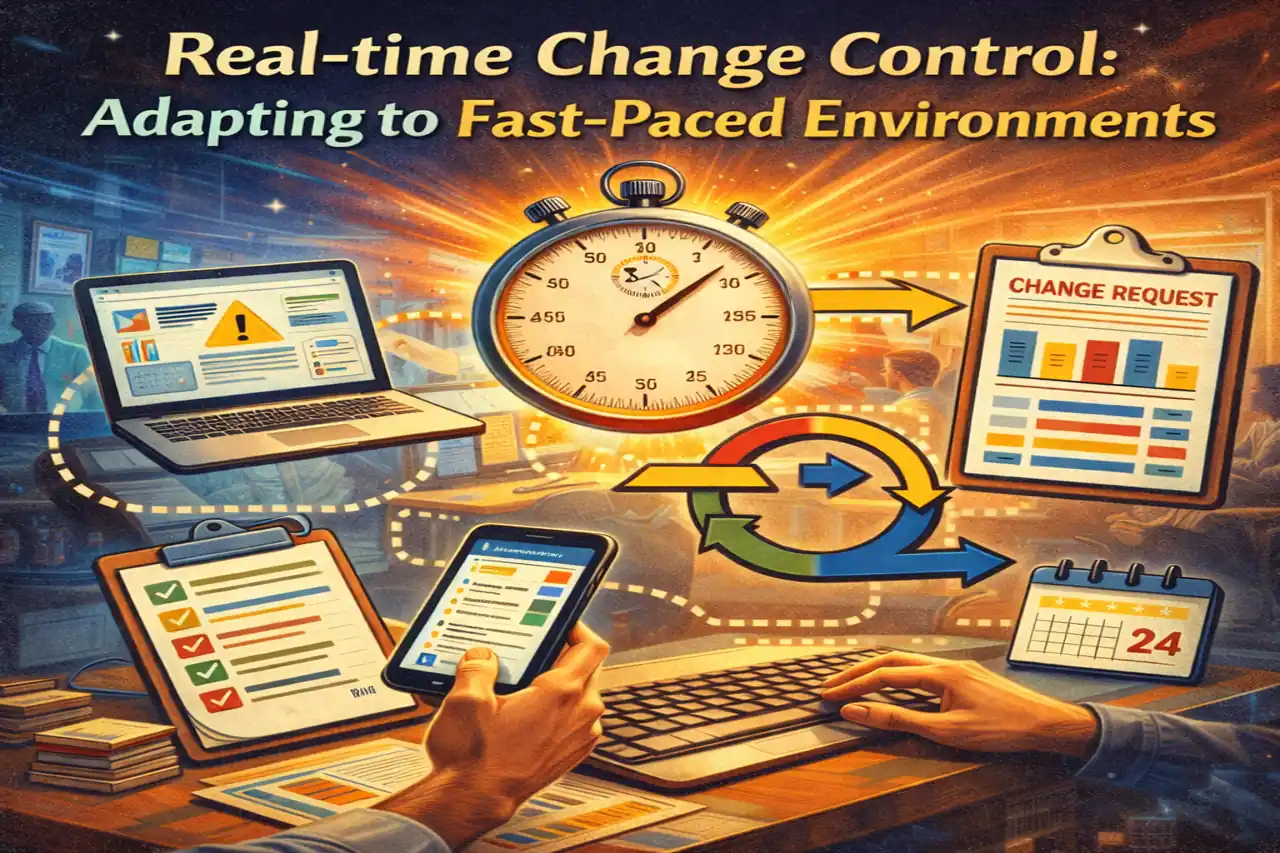
To address these challenges, the concept of real-time change control emerges as a vital strategy for project managers in dynamic environments. This approach emphasizes the need for immediate assessment and response to changes as they occur, rather than relying on traditional, often slower, change management processes.
- Agility and Responsiveness: Real-time change control allows project teams to respond swiftly to new information or shifts in project requirements, ensuring that projects remain aligned with business goals and market demands.
- Enhanced Collaboration: By leveraging collaborative tools and technologies, project managers can facilitate real-time communication among team members and stakeholders, enabling quicker decision-making and approval processes.
- Continuous Improvement: Implementing real-time change control fosters a culture of continuous improvement, where teams regularly reflect on their processes and outcomes, adapting their strategies to enhance efficiency and effectiveness.
As the pace of change accelerates in tech and startup environments, adopting a real-time change control process is not just beneficial but essential. By understanding the significance of change control, recognizing the unique challenges faced in these sectors, and embracing real-time strategies, project managers can navigate the complexities of their projects with greater confidence and success.
Understanding the Change Control Process Flow
Particularly within tech and startup environments, the ability to manage changes effectively is crucial. The change control process serves as a structured approach to managing alterations in project scope, ensuring that all changes are systematically evaluated and implemented. Below, we outline the traditional change control process steps, highlight the differences between traditional and real-time change control processes, and discuss the importance of flexibility and adaptability in fast-paced settings.
Traditional Change Control Process Steps
- Identification: The first step involves recognizing the need for a change. This could stem from various sources, such as stakeholder feedback, project performance metrics, or external market conditions. Clear documentation of the proposed change is essential to ensure all team members understand the context and rationale behind it.
- Assessment: Once a change is identified, it must be assessed for its impact on the project. This includes evaluating how the change will affect project scope, timelines, resources, and costs. Stakeholders should be involved in this assessment to gather diverse perspectives and insights.
- Approval: After assessment, the proposed change requires formal approval from relevant stakeholders or a change control board. This step is critical to ensure that all parties agree on the necessity and implications of the change before it is implemented.
- Implementation: Upon receiving approval, the change is executed. This step involves updating project plans, reallocating resources, and communicating the change to all team members. Effective implementation is key to minimizing disruption and ensuring that the project remains on track.
- Review: Finally, after implementation, the change should be reviewed to evaluate its effectiveness. This involves monitoring the outcomes and determining whether the change achieved its intended goals. Lessons learned during this phase can inform future change control processes.
Differences Between Traditional and Real-Time Change Control Processes
While the traditional change control process provides a solid framework, it can be too rigid for fast-paced environments. Here are some key differences:
- Speed of Response: Traditional processes can be time-consuming, often requiring multiple levels of approval. In contrast, real-time change control emphasizes rapid decision-making, allowing teams to respond to changes almost instantaneously.
- Flexibility: Real-time change control processes are designed to be more adaptable. They allow for ongoing adjustments based on real-time data and feedback, rather than adhering strictly to pre-defined steps.
- Collaboration: In fast-moving industries, collaboration is essential. Real-time change control encourages continuous communication among team members, stakeholders, and clients, fostering a culture of transparency and agility.
Importance of Flexibility and Adaptability in Fast-Paced Settings
The ability to pivot quickly is paramount. Here are a few reasons why flexibility and adaptability are crucial:
- Market Responsiveness: Fast-paced industries often face rapidly changing market conditions. A flexible change control process enables project managers to adjust strategies and deliverables in response to new opportunities or threats.
- Enhanced Innovation: By allowing for real-time adjustments, teams can experiment with new ideas and approaches without the fear of lengthy approval processes stifling creativity.
- Improved Team Morale: When team members feel empowered to make changes and contribute to the project’s direction, it fosters a sense of ownership and engagement, leading to higher morale and productivity.
Understanding the traditional change control process is essential for project managers, but adapting to real-time change control practices can significantly enhance project outcomes in fast-paced environments. By embracing flexibility and collaboration, project managers can navigate the complexities of modern projects more effectively, ensuring that their teams remain agile and responsive to change.
Key Strategies for Implementing Real-Time Change Control
In the fast-paced environments of tech and startups, the ability to adapt to change is crucial for project success. Implementing a real-time change control process can significantly enhance a project manager’s effectiveness in navigating these dynamic environment. Here are some actionable strategies to consider:
- Leverage Technology and Tools for Real-Time Collaboration and Communication
Utilize project management software and collaboration tools that facilitate instant communication among team members. Platforms like Slack, Trello, or Asana can help streamline discussions and document changes in real-time, ensuring that everyone is on the same page. This immediate access to information allows teams to respond swiftly to any alterations in project scope or direction, minimizing delays and misunderstandings. - Establish a Culture of Agility Within the Team to Embrace Change
Foster an environment where team members feel empowered to adapt and innovate. Encourage a mindset that views change as an opportunity rather than a setback. This can be achieved through regular training sessions, workshops, and open discussions about the importance of flexibility in project management. When team members are comfortable with change, they are more likely to contribute positively to the change control process. - Implement Continuous Feedback Loops to Assess and Respond to Changes Quickly
Create mechanisms for ongoing feedback throughout the project lifecycle. This could involve regular check-ins, retrospectives, or surveys that allow team members to voice concerns and suggest improvements. By establishing these feedback loops, project managers can quickly identify areas that require adjustment and implement changes before they escalate into larger issues. This proactive approach not only enhances project outcomes but also boosts team morale. - Define Clear Roles and Responsibilities for Change Management Processes
Clearly outline who is responsible for what within the change control process. This includes identifying key stakeholders, change requestors, and approvers. By delineating roles, project managers can ensure that everyone understands their responsibilities and the procedures for submitting and approving changes. This clarity helps to streamline the change management process, reducing confusion and enhancing accountability.
By adopting these strategies, project managers in tech and startups can effectively implement real-time change control, ensuring that their projects remain agile and responsive to the ever-evolving demands of their industries. Embracing these practices not only leads to better project outcomes but also cultivates a resilient team ready to tackle future challenges.
Utilizing Agile Methodologies for Effective Change Control
In the fast-paced environments of tech and startups, the ability to adapt to change is crucial for project success. Agile methodologies offer a framework that not only accommodates change but also leverages it to enhance project outcomes. Here, we explore how Agile principles align with real-time change control processes, the significance of sprints and iterations, and provide examples of successful implementations in tech startups.
Principles of Agile and Real-Time Change Control
Agile methodologies are built on several core principles that resonate with the need for effective change control:
- Customer Collaboration Over Contract Negotiation: Agile emphasizes ongoing collaboration with stakeholders, allowing project teams to respond swiftly to changing requirements. This principle ensures that feedback is continuously integrated, making it easier to manage changes as they arise.
- Responding to Change Over Following a Plan: Agile values adaptability, encouraging teams to embrace change rather than resist it. This flexibility is essential in fast-moving industries where market demands can shift rapidly.
- Delivering Working Software Frequently: By focusing on delivering functional increments of the product, Agile teams can incorporate changes based on user feedback more effectively. This iterative approach allows for real-time adjustments, enhancing the overall quality of the project.
These principles create a robust framework for real-time change control, enabling project managers to navigate the complexities of evolving project management.
The Role of Sprints and Iterations
Sprints and iterations are fundamental components of Agile that facilitate effective change management:
- Sprints: Typically lasting two to four weeks, sprints allow teams to focus on specific deliverables within a short timeframe. This structure enables project managers to assess progress regularly and make necessary adjustments based on stakeholder feedback or changing market conditions. By reviewing and reflecting on the work completed at the end of each sprint, teams can identify areas for improvement and adapt their strategies accordingly.
- Iterations: Agile encourages iterative development, where each cycle builds upon the previous one. This approach allows teams to refine their products continuously, integrating changes based on real-time data and user input. Iterations help in minimizing risks associated with change, as teams can test and validate new features before full-scale implementation.
Together, sprints and iterations create a dynamic environment where change is not only expected but embraced, allowing project managers to maintain control over the project while adapting to new challenges.
Incorporating Agile methodologies into change control processes allows project managers in tech and startups to navigate the complexities of rapid change effectively. By embracing Agile principles, leveraging sprints and iterations, and learning from successful case studies, teams can enhance their adaptability and responsiveness, ultimately leading to more successful project outcomes.
Tools and Technologies for Real-Time Change Control
In the fast-paced environments of tech and startups, effective change control is crucial for maintaining project momentum and ensuring that teams can adapt swiftly to evolving requirements. Here, we explore popular project management tools that facilitate real-time change tracking, the benefits of collaboration tools for documentation and communication, and the importance of selecting the right technology stack for your team’s specific needs.
Popular Project Management Tools for Real-Time Change Tracking
- Jira: Widely used in software development, Jira allows teams to track changes in real-time through its issue tracking and project management features. It provides customizable workflows and integrates with various development tools, making it ideal for agile teams.
- Trello: Trello’s card-based system is excellent for visualizing tasks and changes. It allows teams to quickly update project statuses and communicate changes through comments and attachments, making it a user-friendly option for startups.
- Asana: Asana offers robust project tracking capabilities with features that allow teams to assign tasks, set deadlines, and monitor progress in real-time. Its integration with other tools enhances its functionality for change management.
- Monday.com: This platform provides a highly customizable interface that can adapt to various project needs. Its real-time updates and collaboration features make it suitable for teams that require flexibility in managing changes.
- ClickUp: ClickUp combines project management and documentation in one platform, allowing teams to track changes and collaborate seamlessly. Its features include task assignments, time tracking, and goal setting, which are essential for managing dynamic projects.
Benefits of Using Collaboration Tools for Documentation and Communication
- Enhanced Communication: Collaboration tools like Slack or Microsoft Teams facilitate instant communication among team members, allowing for quick discussions about changes. This immediacy helps prevent misunderstandings and keeps everyone aligned.
- Centralized Documentation: Tools such as Confluence or Google Docs enable teams to document changes in a centralized location. This ensures that all team members have access to the latest information, reducing the risk of outdated or conflicting data.
- Real-Time Updates: Many collaboration tools offer real-time editing and notifications, which means that any changes made are instantly visible to all team members. This feature is vital for maintaining transparency and accountability in fast-moving projects.
- Integration Capabilities: Most collaboration tools can integrate with project management software, creating a seamless workflow that enhances the change control process. This integration allows for automatic updates and notifications, streamlining communication and documentation.
Importance of Choosing the Right Technology Stack
Selecting the appropriate technology stack is critical for effective change control in project management. Here are some considerations:
- Team Size and Structure: The tools chosen should align with the size and structure of the team. Smaller teams may benefit from simpler, more intuitive tools, while larger teams might require more robust solutions with advanced features.
- Project Complexity: For complex projects, tools that offer detailed tracking and reporting capabilities are essential. Understanding the specific needs of the project will guide the selection of tools that can handle the required level of detail.
- Integration with Existing Systems: It’s important to choose tools that can integrate with the existing technology stack. This ensures that data flows smoothly between systems, reducing the need for manual updates and minimizing errors.
- User Adoption: The chosen tools should be user-friendly to encourage adoption among team members. If the tools are too complex or cumbersome, it may lead to resistance and hinder the change control process.
Implementing real-time change control in fast-paced environments requires the right combination of tools and technologies. By leveraging popular project management and collaboration tools, teams can enhance their change tracking capabilities, improve communication, and ensure that they are well-equipped to adapt to the ever-evolving demands of their projects.
Measuring the Impact of Real-Time Change Control
In the fast-paced environments of tech and startups, implementing a robust real-time change control process is essential for maintaining project momentum and ensuring alignment with evolving business goals. To effectively evaluate the success of these processes, project managers must focus on several key strategies.
1. Identify Key Performance Indicators (KPIs) to Measure Success
Establishing clear KPIs is crucial for assessing the effectiveness of real-time change control. Here are some important KPIs to consider:
- Change Request Cycle Time: Measure the time taken from the submission of a change request to its approval or rejection. A shorter cycle time indicates a more efficient change control process.
- Implementation Success Rate: Track the percentage of changes that are successfully implemented without causing disruptions. This reflects the quality of the change control process.
- Stakeholder Satisfaction: Use surveys or feedback forms to gauge stakeholder satisfaction with the change control process. High satisfaction levels can indicate effective communication and management of changes.
- Cost Variance: Monitor the budget impact of changes. An increase in costs may suggest that the change control process is not adequately assessing the financial implications of changes.
2. Gather Data and Feedback from Team Members and Stakeholders
Collecting data and feedback is vital for understanding the real-world impact of change control processes. Here are some methods to facilitate this:
- Regular Surveys and Feedback Sessions: Conduct periodic surveys to gather insights from team members and stakeholders about their experiences with the change control process. This can help identify pain points and areas for improvement.
- Retrospective Meetings: After significant changes, hold retrospective meetings to discuss what worked well and what didn’t. This collaborative approach encourages open dialogue and can lead to actionable insights.
- Performance Dashboards: Utilize project management tools to create dashboards that visualize KPIs and other relevant data. This allows for real-time monitoring and quick adjustments based on the data collected.
3. Methods for Continuous Improvement Based on Evaluation Results
Continuous improvement is a cornerstone of effective change control. Here are strategies to implement based on evaluation results:
- Iterative Process Refinement: Use the feedback and data collected to refine the change control process iteratively. This could involve adjusting approval workflows, enhancing communication channels, or providing additional training for team members.
- Benchmarking Against Industry Standards: Compare your change control metrics with industry benchmarks to identify areas where your process may lag. This can provide a roadmap for enhancements.
- Adopting Agile Methodologies: Embrace agile practices that allow for flexibility and rapid response to change. This can include regular check-ins and adaptive planning sessions that incorporate feedback from the change control process.
By focusing on these strategies, project managers in tech and startups can effectively measure the impact of their real-time change control processes, ensuring that they remain agile and responsive in a fast-moving environment. This proactive approach not only enhances project outcomes but also fosters a culture of continuous improvement and collaboration within teams.
Conclusion: The Future of Change Control in Tech and Startups
The importance of real-time change control cannot be overstated. As project managers navigate the complexities of fast-paced environments, the ability to implement effective change control processes is crucial for maintaining project integrity and ensuring successful outcomes. Here are the key takeaways that highlight the significance of real-time change control and encourage proactive management strategies:
- Importance of Real-Time Change Control: In industries characterized by swift changes and innovation, real-time change control allows project managers to respond promptly to new information, shifting priorities, and unforeseen challenges. This agility not only helps in minimizing disruptions but also enhances the overall efficiency of project execution. By integrating real-time change control, teams can maintain alignment with project goals and stakeholder expectations, ultimately leading to higher satisfaction and better results.
- Adoption and Adaptation of Strategies: Leveraging collaborative tools, establishing clear communication channels, and fostering a culture of flexibility within their teams. These strategies are not one-size-fits-all; rather, they should be tailored to fit the unique dynamics of each project and organization. By being open to adaptation, project managers can ensure that their change control processes remain relevant and effective in the face of ongoing changes.
- Staying Ahead in Tech: The necessity of staying ahead in an ever-changing technological environment cannot be emphasized enough. As new technologies emerge and market demands shift, project managers must be proactive in their approach to change management. This involves not only anticipating potential changes but also being prepared to implement them swiftly and efficiently. By fostering a mindset of continuous improvement and learning, project managers can position their teams to thrive amidst uncertainty and capitalize on new opportunities.
The future of change control in tech and startups hinges on the ability to embrace real-time processes that enhance responsiveness and adaptability. By prioritizing proactive change management, project managers can lead their teams to success in an environment where change is the only constant.
Find out more about Shaun Stoltz https://www.shaunstoltz.com/about/.
This post was written by an AI and reviewed/edited by a human.